Restaurant Table Spacing: The Complete Distance Guide
6 January, 2026
⚪
Johansson
Home > Blog > This Blog
Table spacing decisions happen once during restaurant design, yet they affect every guest who walks through your door. Position tables 12 inches apart, and you'll pack in more covers, but also drive away repeat customers. Space them 36 inches apart and satisfaction soars, but your capacity plummets.
The distance between restaurant tables isn't just about fitting chairs into a floor plan. Cornell research shows that diners at tables closer than 17 inches apart report significantly reduced satisfaction and spending. Meanwhile, ADA regulations mandate specific clearances for wheelchair access, and fire codes dictate minimum aisle widths for emergency egress.
Most restaurant owners find themselves navigating three competing priorities: maximizing seating capacity for revenue, ensuring compliance with accessibility and safety regulations, and creating an atmosphere that matches their concept. A fine dining establishment requires different spacing than a fast-casual lunch spot, and both need different configurations than a banquet hall.
This guide breaks down the measurements, regulations, and research-backed recommendations you need to optimize your restaurant's table spacing.
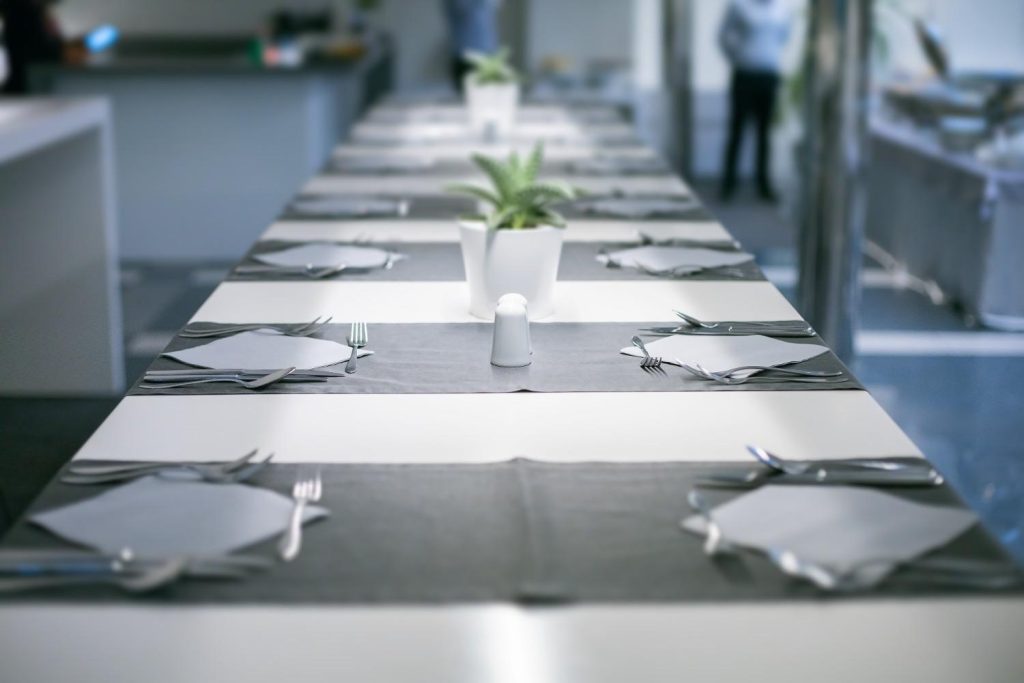
Restaurant table spacing refers to the measured distance between the edges of adjacent tables in a dining area. But the calculation involves more than just the gap between table tops. You're accounting for the full footprint each table occupies, including pushed-out chairs, the clearance guests need to stand up without bumping neighbors, and the pathways staff need to deliver service.
Think of it as three concentric zones. The sitting zone extends 18 to 24 inches from the table edge for occupied chairs. The circulation zone adds another 18 to 36 inches for guests and staff to move. The total clearance combining these zones typically ranges from 36 to 60 inches, depending on your restaurant type.
Spacing shapes the entire dining experience. Generous distances between tables signal privacy and sophistication. Tighter arrangements communicate energy and community. Your spacing choice becomes part of your brand identity before anyone looks at a menu.
Research from 1,000 Americans found that current restaurant design modules place tables just 12 inches or less apart on average. Restaurant owners prefer this density, but patrons don't. The study revealed a clear disconnect between what operators think is adequate and what diners actually want.
Spacing also determines your operational flow. Main aisles need enough width for servers carrying trays to pass each other. Tables positioned too close create bottlenecks during peak service. And if you're violating fire codes or ADA requirements, you're facing fines regardless of how satisfied your customers might be.
The Cornell study of a New York restaurant, mentioned before, measured guest reactions to tables spaced at different distances. Patrons at closely spaced tables reported significantly reduced satisfaction compared to widely spaced arrangements. When tables were set just 17 inches apart, diners felt uncomfortable. Satisfaction improved markedly when spacing increased to roughly 36 inches.
The financial impact was measurable. Guests at cramped tables spent less per minute than those at properly spaced tables. While tight spacing might shorten dining cycles, it comes at a cost, both immediate revenue and future visits.
The same research revealed that women felt considerably less comfortable than men in tight quarters. Context matters too. Couples on dates strongly objected to close table spacing, preferring privacy for intimate conversations. Business lunches showed similar patterns.
Family outings and teenagers accustomed to fast-food environments tolerated closer spacing better. Frequent diners adapted to tightly placed tables more readily than occasional restaurant-goers. Your customer base determines your optimal spacing as much as any building code.
Here's the paradox restaurant owners face. Tight table arrangements demonstrably shorten dining cycles without reducing spending during that visit. You turn tables faster. But research indicates that diners may avoid returning to restaurants with uncomfortable spacing. You gain capacity today but lose lifetime customer value tomorrow.
After one negative experience, 51% of customers won't return to that business again. If cramped spacing creates that negative experience, your short-term capacity gains become long-term revenue losses.

Fast-casual concepts can function with tables positioned 24 to 30 inches apart at peak times. The atmosphere supports closer arrangements; guests expect quick service and shorter stays, which can be enhanced by a thoughtful selection of restaurant furniture. But even in high-turnover environments, spacing below 24 inches creates friction that slows service despite the density.
You'll see some fast-casual spots push tables as close as 12 inches during lunch rushes. This works only if you're willing to accept customer complaints and reduced return rates. Most successful operators stick to the 24-30 inch range as their floor.
Full-service restaurants benefit from 30 to 42 inches between table edges to ensure adequate space for restaurant furniture and guest movement. This spacing accommodates servers carrying plates and provides guests with enough personal space to enjoy conversations without eavesdropping on adjacent tables.
The middle ground, around 36 inches, satisfies most full-service concepts. You maintain reasonable capacity while meeting guest expectations for comfort. Industry standards suggest this spacing allows for proper circulation without feeling either cramped or empty.
Fine dining requires 42 to 54 inches minimum, with many upscale restaurants providing even wider spacing. At this level, you're selling an experience built on exclusivity and privacy. Acoustic separation matters. Visual separation matters. Guests paying premium prices expect premium space.
Some fine dining establishments space tables 60 inches or more apart. The generous distances create intimacy and eliminate the sensation of dining in a crowded room. Your capacity drops, but your average check and perceived value rise proportionally with an efficient seating arrangement.
Banquet configurations need 60 to 72 inches between round tables to accommodate table service. Events involve multiple courses delivered simultaneously to large groups, necessitating a strategic restaurant table layout for efficiency. Servers need room to navigate with trays. Guests need space to stand, mingle, and access buffet stations without disrupting seated diners.
Wedding receptions and corporate events often use 66 to 72-inch spacing to ensure smooth service flow. Tighter spacing creates chaos during service. Wider spacing improves both guest experience and staff efficiency.
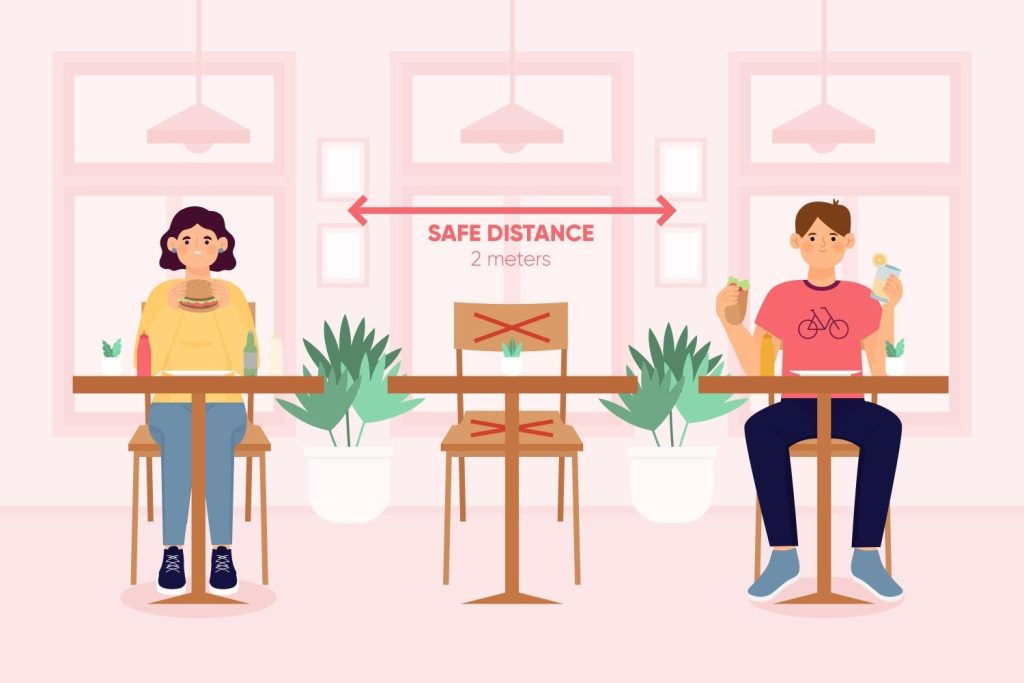
The distance between table edges tells only part of the story. Guests need 18 to 24 inches from the table edge to the back of their chair just to sit comfortably. Add another 6 to 12 inches for them to push back and stand without colliding with adjacent chairs.
If you're spacing 30-inch tables just 24 inches apart, you're creating a 78-inch zone for two tables (30 + 24 + 24 for chair clearance on each side). That's manageable. But if you forget to account for chair depth, your "generous" 36-inch gap suddenly becomes inadequate.
A pedestal base creates obstacles at floor level that wheelchair users can't navigate. ADA-compliant tables require leg configurations that provide clear floor space. Even for non-accessible tables, base plates, and support structures eat into the circulation space you've carefully planned on paper.
Test your layout by measuring at floor level, not just at table height. A 30-inch gap between table edges might provide only 18 inches of actual clearance once you account for base footprints and chair legs.
Tables positioned to maximize capacity often create dead zones where servers can't efficiently circulate. You've placed a four-top against the wall with just 30 inches to the next table. Now your server has to squeeze sideways while carrying a tray. Service slows. Accidents increase. Staff frustration builds.
Map your main service corridors before finalizing table positions. Servers need 36 to 48 inches of aisle width to move efficiently. High-traffic areas deserve a minimum of 48 inches so two staff members can pass each other without collision.
Federal law requires that at least 5% of your tables, or a minimum of one table if you have fewer than 20, must be wheelchair accessible. These tables need specific clearances that directly impact your spacing decisions.
Accessible tables require a clear floor space of 30 inches by 48 inches for wheelchair maneuvering. The table height must fall between 28 and 34 inches, with at least 27 inches of knee clearance underneath. The clear space extends at least 19 inches deep under the table surface.
Access routes to these tables need a 36-inch clearance minimum. If your main aisles don't meet this standard, you're in violation regardless of how well-spaced your other tables might be. Accessible tables can't be segregated; they must be dispersed throughout your dining areas.
Fire codes dictate minimum aisle widths for emergency egress. While specific requirements vary by jurisdiction, most follow NFPA 101 standards that base occupant loads on square footage.
Occupant load calculations typically allow 12 to 15 square feet per person for full-service restaurants, ensuring adequate space for tables and chairs. Your total capacity determines whether you need sprinkler systems and fire alarms. Aisles must provide a 19-inch minimum clearance for emergency evacuation.
Some local codes mandate specific spacing between table edges. The Los Angeles building code, for example, requires tables to be arranged so that seating edges are at least 54 inches apart in assembly occupancies. Check your local regulations before finalizing any layout.
Your main aisles function as highways during service. They need 48 to 60 inches of width where servers regularly pass each other with trays. Secondary aisles with one-way traffic can narrow to 36 to 44 inches.
Think about your busiest service period and how your table layout can optimize table turnover. If three servers might need to navigate the same corridor simultaneously, one heading to the kitchen, another delivering food, a third clearing dishes, you need that full 48 to 60-inch width. Cutting corners here saves space but costs time.
Map your kitchen-to-table routes before placing a single chair. Food should travel the shortest practical distance while avoiding guest circulation paths. Servers carrying hot plates shouldn't be weaving through clusters of standing guests or navigating tight squeezes between table backs.
Create dedicated service corridors that connect kitchen doors to different sections of your dining room. These corridors might run along walls or between rows of tables. Just make sure they provide consistent width and don't force servers to perform gymnastics during peak hours.
Tight spacing speeds table turns by making guests slightly uncomfortable, so they finish and leave sooner. But research shows this strategy only works if you're willing to sacrifice repeat business.
A better approach adjusts spacing based on your service model. Quick-service lunch crowds tolerate tighter configurations because they're already primed for fast turnover. Evening diners expect more space and linger regardless of how cramped they feel. Match your spacing to realistic turn times rather than trying to force faster turnover through discomfort.
Start with the industry standards for your concept. Fine dining allocates 14 square feet per person for spacious dining. Full-service restaurants use 12 square feet per person. Cafeteria and close seating drops to 10 square feet per person.
These figures include the table, chair, and proportional aisle space. A 1,500-square-foot dining room configured for full-service would accommodate approximately 125 guests (1,500 ÷ 12). But you'll rarely achieve perfect efficiency, account for architectural quirks, required aisles, and dead spaces.
Square tables can be pushed closer together than round ones because their edges are parallel, allowing for a more effective table layout in a small restaurant. You might space square tables 24 inches apart while needing 30 inches for rounds of the same size. Round tables waste space in corners but facilitate conversation.
Rectangular tables offer flexibility. A 30-by-48-inch rectangle can accommodate two guests on each long side with proper spacing. But if you only seat one side—perhaps because it's against a wall—you need just 36 inches to the next table instead of the full spacing required for back-to-back seating.
The smartest operators design for adjustability. Use movable tables rather than fixed banquettes in sections where demand fluctuates. You can tighten spacing during lunch rushes when office workers expect quick turnover, then spread tables wider for dinner service when guests want to linger.
Digital layout software helps you test configurations before committing. Many programs include measurement tools that calculate distances and flag code violations. You can visualize traffic flow, identify bottlenecks, and experiment with different arrangements without moving physical furniture.
Some concepts benefit from dynamic spacing. If you're slammed at lunch with office workers seeking quick meals, tighter spacing makes sense. They're less sensitive to personal space during a 30-minute lunch break. Add a few extra two-tops with reduced spacing to capture that demand.
Then reconfigure for dinner. Remove those extra tables, spread the remaining ones wider, and create the relaxed atmosphere that evening diners expect. This strategy requires flexible furniture and staff trained to quickly reset the room. But it can increase revenue without permanently committing to either extreme.
Business lunches tolerate closer spacing than romantic dinners, making the seating arrangement critical for different dining experiences. Families with kids need different configurations than couples celebrating anniversaries. If your restaurant serves distinguished guests, consider creating zones with varied spacing.
Position tightly spaced tables in well-lit sections near entrances for quick lunch traffic. Reserve spacious, quieter areas deeper in the dining room for evening guests seeking intimacy. Your host can match seating to the occasion without turning away any segment of your market, thanks to a flexible seating arrangement.
Outdoor dining expands your capacity during good weather, allowing you to space indoor tables more generously. Winter forces you to maximize interior seating, potentially tightening spacing within code limits.
Some restaurants reduce capacity during slow seasons, removing tables entirely to create a less sparse appearance. A half-empty dining room with wide spacing looks intentional. The same half-empty room with tables every 24 inches just looks unpopular.
CAD programs and specialized restaurant design software let you experiment with configurations digitally. You can input your exact room dimensions, place virtual tables, and instantly see measurements between all elements.
Programs like SmartDraw and AutoCAD include libraries of standard table sizes and chair dimensions. Drop them into your floor plan, adjust spacing, and the software calculates total capacity. Many tools highlight ADA violations and insufficient aisle widths before you buy any furniture.
Restaurant designers and architects understand the balance between capacity, compliance, and customer comfort. They've configured hundreds of dining rooms and know which spacing decisions work in practice versus just on paper.
A professional can walk your space, assess sight lines, identify acoustical challenges, and propose solutions you might not consider. They understand local codes and can navigate the permit process to create an optimal restaurant floor plan. The investment typically pays for itself through improved flow and fewer costly mistakes.
Restaurant table spacing determines your capacity, compliance status, and customer satisfaction simultaneously. The measurements matter—24 inches creates a different experience than 54 inches—but the optimal distance depends on your concept, clientele, and operational priorities.
Start with your restaurant type's industry standards, then verify you meet ADA and fire code requirements. Test your layout for service flow before committing to any configuration. And remember that Cornell research: spacing below three feet reduces satisfaction and spending, regardless of how many more covers you can squeeze in.
Your floor plan isn't permanent. Successful operators adjust spacing based on meal periods, seasons, and evolving customer expectations. The key is understanding the trade-offs and making intentional choices rather than defaulting to maximum density.
Ready to reconfigure your dining room? Map your current spacing, identify bottlenecks, and calculate whether wider tables might actually increase revenue through improved satisfaction and return visits. Sometimes, less capacity generates more profit.