3 Seater Sofa Size Guide: Find the Perfect Fit for Your Living Room
2 January, 2026
⚪
Johansson
Home > Blog > This Blog
Finding the right 3 seater sofa size in feet can make or break your living room layout. Too big, and it swallows the space. Too small, and the room feels oddly empty.
I've seen countless homeowners measure their rooms, pick what looks perfect online, and then watch in dismay as their new sofa blocks walkways or barely fits through the front door.
Nearly half of furniture buyers regret their sofa purchase, mostly due to sizing mistakes. The problem isn't a lack of options; it's knowing which dimensions actually work for your specific space.
Standard 3 seater sofas typically range from 72 to 96 inches wide, but that 24-inch variance makes a huge difference when you're working with 200 square feet versus 400.
This guide walks you through everything: exact dimensions in feet, spacing requirements around your sofa, how to avoid delivery disasters, and the simple rules designers use to pick proportions that look intentional.

You'll know exactly what size works for your room before you click "buy."
A 3 seater sofa is designed to comfortably seat three adults, which means the dimensions need to balance adequate seating space with practical room fit. The standard measurements fall into predictable ranges, but understanding what each dimension means helps you choose the right one for your space.
Width runs from arm to arm and determines how much wall space your sofa occupies. Standard 3 seater sofa dimensions typically range from 72 to 96 inches (6 to 8 feet). That's roughly 24 to 32 inches of seating space per person.
The most common width you'll encounter is around 84 inches (7 feet). This hits the sweet spot for most living rooms, enough seating without overwhelming the space. Compact models designed for apartments or smaller rooms might measure 72-78 inches, while oversized or luxury sofas can push 90-96 inches.
When you're comparing options, width is the measurement that matters most for room layout. It determines whether your sofa fits proportionally against your wall and how much space remains for side tables, lamps, or walkways.
Depth measures from the front edge of the seat to the back of the sofa. Standard depths range from 30 to 40 inches, with 36 inches being typical.
Deeper sofas (38-40 inches) let you sink in and curl up, but they eat into your room. If you have limited square footage, that extra depth might reduce your walkway clearance to uncomfortable levels. Shallower sofas (30-34 inches) work better for formal living rooms or smaller spaces where you need to preserve traffic flow.
Your height plays a role here. Taller people generally prefer deeper seats because their legs need more support. Shorter individuals might find that a 40-inch depth leaves their feet dangling uncomfortably. The ideal seat depth lets you sit back with your back against the cushions while your feet rest flat on the floor.
Height measures from the floor to the top of the sofa back. Standard heights fall between 30 and 36 inches, with 33 inches being the most common.
This measurement affects both comfort and visual weight. Higher backs (34-36 inches) provide better head and neck support, which matters if you're using the sofa for extended TV watching or reading. Lower backs (30-32 inches) create a more modern, streamlined look and can make a room feel more open.
Seat height, the distance from the floor to the top of the seat cushion, typically measures 17-19 inches. This should align roughly with your knee height when standing. Too low, and getting up becomes difficult. Too high, and your feet won't touch the ground comfortably.
Most people forget about diagonal depth until delivery day arrives. This measurement runs from the bottom back corner of the sofa to the top front corner, and it determines whether your sofa can pivot through doorways.
To calculate diagonal depth yourself: measure the height and depth of your sofa, then use this formula: √(height² + depth²). For example, a sofa that's 36 inches tall and 36 inches deep has a diagonal depth of about 51 inches.
Delivery teams use the pivot method to get sofas through narrow doorways. They stand the sofa on one arm, rotate it at an angle, then maneuver it through. If your diagonal depth is smaller than your doorway width, the sofa should fit. If it's larger, you'll need to remove legs, find an alternative entry point, or choose a different sofa.
Your living room's square footage should guide your sofa width. A perfectly sized sofa in a showroom can look completely wrong once it's in your actual space, either lost in emptiness or crammed against walls with no breathing room.

Small living rooms—common in urban apartments and older homes—typically measure around 10 x 12 feet to 12 x 15 feet. In spaces under 200 square feet, you're working with tight constraints.
Stick with sofas on the smaller end: 72-78 inches wide. Anything larger starts to dominate the room and restricts your ability to add other furniture. You'll likely need to place the sofa against a wall rather than floating it, and you might skip accent chairs entirely or opt for one compact chair instead of two.
In compact spaces, multifunctional furniture makes sense. A sleeper sofa gives you guest accommodations without needing a separate guest room. Storage ottomans replace coffee tables while hiding blankets and remotes.
The key with small rooms is avoiding the temptation to go too small. A 60-inch loveseat might technically fit, but three adults can't sit comfortably on it. A proper 72-inch 3 seater gives you functional seating without wasting money on undersized furniture that doesn't meet your needs.
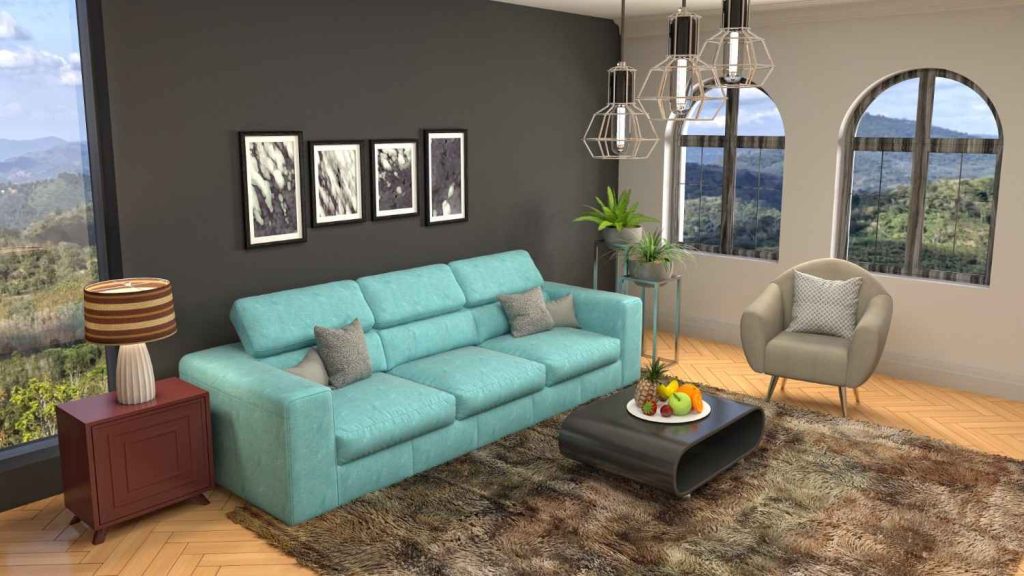
Medium living rooms, typically 12 x 18 feet to 15 x 20 feet, represent the average American living room. You have options here.
A standard 84-inch sofa fits comfortably with room for a coffee table, two accent chairs, and clear walkways. You can experiment with furniture placement: floating the sofa away from the wall, creating conversation areas, or angling pieces to break up the box-like feel of the room.
This size range gives you the most flexibility. If you entertain frequently, go with a sofa on the larger end (88-90 inches) and skip one accent chair. If you prefer more open space, choose a 78-82 inch sofa and add multiple smaller seating options.

Large living rooms, anything over 15 x 20 feet, can handle bigger furniture without feeling cramped. You're looking at sofas in the 90-96 inch range, or even sectionals if you want to fill the space properly.
The mistake people make with large rooms is going too small. A 78-inch sofa floating in a 20 x 25-foot space looks like an afterthought. It creates awkward empty zones and makes the room feel unfinished.
Designers follow the 2/3 rule for large spaces: your sofa should occupy roughly two-thirds of the length of your main wall. So if you're placing your sofa against a 14-foot wall, you want a sofa around 9 feet (108 inches) wide, which means either a large 3 seater or a sectional.
Large rooms also benefit from creating multiple zones. Your sofa anchors the main seating area, but you can add a reading nook with a chair and floor lamp in a corner, or a console table behind the sofa to define the space.
Interior designers use a simple guideline when selecting sofa sizes: your sofa should take up about 2/3 of the length of the wall it's placed against.
This rule prevents the two most common sizing mistakes: going too small or too large. A sofa that's exactly 2/3 the wall length creates visual balance. It looks intentional rather than random.
Here's how it works in practice:
The remaining 1/3 of wall space accommodates side tables, lamps, or simply creates breathing room so the furniture doesn't feel crammed wall-to-wall.
This guideline works best when you're placing a sofa against a wall. If you're floating your sofa in the center of a room, the 2/3 rule doesn't apply; instead, you're working with the overall room proportions and creating defined zones.
Getting the sofa size right is only half the equation. The spacing around your sofa determines whether your living room feels comfortable or cramped.
Leave 14-18 inches between your sofa and coffee table. This distance lets you reach your coffee or remote without stretching, while giving you enough leg room to stand up without bumping your shins.
Going shorter than 14 inches creates a cramped feeling. You'll constantly knock into the table when getting up. Going wider than 18 inches means you can't comfortably reach items on the table while seated.
Your coffee table should also follow a proportional rule: it should take up about 2/3 of your sofa's length. So an 84-inch sofa pairs with a coffee table around 56 inches long.
You need at least 30 inches of clearance for major walkways through your living room. This is the space people use to move from one room to another, like from your front door to the kitchen, or from the living room to the hallway.
Anything less than 30 inches forces people to turn sideways or squeeze past furniture. Over time, this gets annoying and damages furniture edges as people brush against arms and corners.
For low-traffic areas, like the space behind a sofa that's against a wall, you can get away with less. But high-traffic paths need a full 30 inches minimum.
If your sofa faces a TV, the viewing distance matters for both comfort and eye health. The general rule is to sit 1.5 to 2.5 times the diagonal screen size away from the TV.
For a 55-inch TV, that's roughly 8-12 feet. A 65-inch TV needs 9-14 feet. This range prevents eye strain while giving you an immersive viewing experience.
When you're planning your layout, measure from where you'll sit on the sofa to where the TV will be mounted or placed. If the distance falls outside the recommended range, either adjust your sofa position or reconsider your TV size.
When floating a sofa away from the wall, leave at least 12 inches between the sofa back and the wall. This creates enough room for a console table and prevents the sofa from looking awkwardly disconnected from the space.
If you're placing your sofa against a wall, you obviously don't need clearance. But consider whether floating it might improve traffic flow or create a more intentional furniture arrangement.
One of the most frustrating delivery day scenarios is discovering your new sofa won't fit through your front door. Fifteen percent of furniture buyers experience this problem, leading to return fees, delivery charges, and wasted time.
Most modern doorways measure 30-36 inches wide. Older homes and apartments often have narrower openings, sometimes as small as 28-30 inches.
The doorway width alone doesn't tell the full story. You also need to account for door thickness, protruding hinges, and door handles that reduce usable clearance. When a door is open, the actual passage width might be 2-3 inches narrower than the door frame measurement.
Interior doors tend to be narrower than exterior doors. If your sofa needs to pass through multiple doorways to reach its final destination, measure each one.
Before buying a sofa, map out the entire delivery path from your front door to the room where it will live. Measure every doorway, hallway width, and stairway turn along that route.
For doorways, measure both the width and height of the opening, not the door itself, but the actual passable space. Note any obstacles like door handles, light fixtures, or radiators that stick out into the path.
For hallways, measure the narrowest point. If you have a tight corner where two hallways meet, measure the turning radius. Some sofas won't make sharp 90-degree turns even if they technically fit through straight hallways.
For stairs, measure the width of the staircase and the height from the stairs to the ceiling at the lowest point. The diagonal depth measurement becomes crucial here.
The pivot method is how delivery professionals get sofas through doorways that seem too narrow. Here's how it works:
First, they stand the sofa vertically on one arm. Then they tilt it at an angle and rotate it through the doorway. Once inside, they lower it back down to its normal position.
This method works because the diagonal depth (the measurement from the bottom back corner to the top front corner) is often smaller than the sofa's width. A couch that's 84 inches wide might have a diagonal depth of only 51 inches, narrow enough to pivot through a 36-inch doorway.
To check if the pivot method will work for you, you need three measurements: your doorway width, your sofa's height, and your sofa's depth. If the diagonal depth (calculated as √(height² + depth²)) is less than your doorway width, the couch should pivot through successfully.
If the pivot method won't work, you have options:
Remove the sofa legs. Many modern sofas have screw-on legs that detach easily, reducing the overall height by 4-6 inches. This can make the difference between fitting and not fitting.
Take the door off its hinges. Removing the door gives you an extra 1-2 inches of clearance and eliminates the door handle obstacle.
Use a window or patio door. If you have large sliding glass doors or removable windows, this might provide a wider entry point. Some people even hire window installers to temporarily remove a window for furniture delivery.
Choose modular furniture. Some 3 seater sofas come in sections that assemble inside your home. This eliminates doorway concerns entirely.
Even with all the measurements and rules, people still make predictable mistakes when buying sofas. Here's what to watch for.
The number one mistake people make is shopping without measurements. They fall in love with a sofa online or in a showroom, order it, and only then discover it's too big, too small, or won't fit through the door.
Measure your room before you start looking at sofas. Write down the wall length where the sofa will go, the square footage of the room, and the width of every doorway it needs to pass through.
Bring these measurements with you when shopping, either on your phone or on paper. When you find a sofa you like, compare its dimensions to your measurements immediately. This prevents emotional purchases that won't work practically.
Before buying, use painter's tape to outline the sofa's footprint on your floor. Mark out the exact width and depth dimensions in the spot where you plan to place it.
Live with this outline for a few days. Walk around it. See if it blocks walkways or makes the room feel cramped. This simple visualization prevents expensive mistakes and gives you confidence that your chosen size actually works.
A sofa might fit your wall perfectly, but still cause problems if it disrupts how people move through the room.
Think about the paths people take through your living room. If your sofa blocks the natural route from the front door to the kitchen, you've created a permanent inconvenience. If it's positioned so people constantly brush past it to reach other rooms, the fabric will wear faster, and the room will feel awkward.
The 30-inch walkway rule helps, but you also need to consider door swings, furniture placement, and how your family actually uses the space. Sometimes a slightly smaller sofa placed at a different angle creates better flow than a larger one crammed against a wall.
It's easy to prioritize aesthetics when shopping for a sofa, but comfort and proportion matter more than style.
A beautiful modern sofa with low, firm cushions might look perfect online, but if you like to curl up while watching TV, you'll hate it within a week. A deep, plush sofa feels amazing in the showroom, but if it's too deep for your height, your back won't get proper support.
Similarly, a sofa that's stylistically perfect but proportionally wrong for your room will always look off. A massive tufted Chesterfield might fit your design vision, but if it overwhelms your 180-square-foot living room, the space will never feel balanced.
Function comes first. Find a sofa that fits your space and meets your comfort needs, then worry about style within those constraints.
This mistake happens so often that furniture retailers now include specific warnings about measuring delivery paths. People obsess over whether the sofa fits the room and completely forget to check whether it fits through the front door.
Measure every doorway, hallway, and stairway along the delivery route. If your home has narrow Victorian-era doorways or a tight staircase turn, you might need to order a modular sofa or choose a different style with removable components.
Some retailers offer "white glove" delivery services where professionals assess your space before delivery. If you have any doubts about fit, this service is worth the extra cost.
Accurate measurements prevent costly mistakes. Here's the methodical approach that ensures you get numbers you can trust.
You don't need professional equipment, but having the right basic tools makes the job easier:
A 25-foot metal tape measure works better than a short one or a fabric measuring tape. Metal stays rigid and gives accurate readings across long distances.
A notepad and pen for recording measurements. Don't trust your memory; write everything down immediately.
A camera phone for taking photos of tight corners, doorways, or architectural features that might affect furniture placement.
Painter's tape for marking out sofa dimensions on the floor once you know what size you're considering.
Start with your main wall. Measure the full length of the wall where you plan to place your sofa. Measure from baseboard to baseboard, not including any wall trim or molding that sticks out.
Note any obstructions on that wall: electrical outlets, vents, radiators, light switches, or windows. Measure their exact positions from both the floor and the nearest corner. These affect where you can place your sofa.
Measure your room dimensions. Record the length and width of the entire room, then calculate square footage by multiplying length × width.
Measure ceiling height, especially if you're planning to pivot a sofa through doorways or bring it upstairs.
Measure every doorway along the delivery path. For each doorway, record the width (from inside edge to inside edge), height (from floor to top of frame), and note the door swing direction.
Measure hallway widths at their narrowest points and any tight corners where walls meet.
If your sofa needs to go upstairs, measure the stairway width and the ceiling-to-stair height at the lowest point of the turn.
You don't need architectural software to plan your layout. A hand-drawn floor plan on graph paper works fine.
Use a scale like 1 square = 1 foot. Draw your room outline to scale, marking windows, doors, and any permanent fixtures.
Cut out paper rectangles representing furniture at the same scale. For a 3 seater sofa, a typical rectangle would be 7 squares by 3 squares (84 inches wide by 36 inches deep).
Move the paper furniture around on your floor plan. This lets you test different arrangements without moving actual heavy furniture. You can see immediately whether an 84-inch sofa leaves enough room for a coffee table and walkways, or whether you need to size down to 78 inches.
Not all 3 seater sofas follow the standard dimensions. Design style affects measurements in predictable ways.
Modern sofas tend to sit lower and feature shallower depths. A contemporary 3 seater might measure 78 inches wide, 32 inches deep, and 30 inches tall. The lower profile creates a streamlined look but provides less back support.
Traditional sofas run larger in every dimension. A classic Chesterfield or English roll-arm sofa often measures 90 inches wide, 40 inches deep, and 36 inches tall. The extra bulk provides comfort but requires more room.
Mid-century modern sofas split the difference: moderate widths (80-86 inches), medium depths (34-36 inches), and tapered legs that create visual lightness despite substantial dimensions.
Your style preference should align with your space constraints. If you love traditional furniture but have a small living room, you'll need to compromise either on style or on adding other furniture pieces.
Sleeper sofas add functional depth to accommodate the fold-out mattress mechanism. A standard sleeper 3 seater measures 72-90 inches wide (same as regular sofas) but 36-40 inches deep, about 4-6 inches deeper than non-sleeper versions.
When shopping for sleepers, you also need to account for bed extension space. A queen sleeper extends roughly 80 inches from the front of the sofa when fully opened. Measure from your sofa position to the nearest wall or furniture to ensure the bed has room to open without hitting obstacles.
Sleeper sofas solve the guest room problem in small homes, but they're heavier and harder to move than regular sofas. The extra mechanisms add 50-100 pounds, which matters when navigating stairs or tight doorways.
Modular sofas ship in separate pieces that assemble inside your home. This design solves the doorway problem entirely. Even if your doorway is only 28 inches wide, you can bring in pieces individually and assemble them.
Individual modules typically measure 30-36 inches wide, which fits easily through standard doorways. You connect them using brackets or clips to create a full-size sofa.
The tradeoff is that modular sofas sometimes feel less stable than single-piece construction, and the connection points can create slight gaps between cushions. But if you move frequently or have challenging doorways, modular construction is worth considering.
Sometimes the "standard" recommendation doesn't match your specific needs. Here's when to deviate from typical sizing advice.
Size up if you frequently host guests and need maximum seating. A 90-96 inch sofa accommodates four adults more comfortably than the standard 84-inch model, even though it's technically a 3 seater.
Size up if your family members are taller than average. Larger people need more personal space to sit comfortably, so an oversized 3 seater might serve your household better than a standard one.
Size down if your living room pulls double duty as a home office or play space. A more compact 72-78 inch sofa leaves room for a desk or toy storage without sacrificing seating entirely.
Size down if you value open floor space over maximum seating. Some people prefer a minimalist layout with a smaller sofa and lots of breathing room rather than filling every available inch with furniture.
The best size is the one that matches how you actually live, not what design magazines suggest. A sofa is a major purchase; prioritize comfort and function over arbitrary standards.
Getting your 3 seater sofa size right comes down to three things: knowing the standard dimensions (72-96 inches wide, 30-40 inches deep, 30-36 inches tall), measuring your space accurately, and following basic spacing rules.
The 2/3 rule keeps your proportions balanced. The 14-18 inch coffee table distance keeps traffic flowing. The 30-inch walkway clearance prevents that cramped, overcrowded feeling. And measuring your doorways before you buy saves you from delivery-day disasters.
Your living room is where your family gathers, where guests relax, and where you spend countless hours. A properly sized sofa makes that space work better, not just on the day it's delivered, but for the next decade of daily use.
Take the 15 minutes to measure now. It's faster than dealing with a return and cheaper than buying twice.
The standard width of a 3 seater sofa ranges from 6 to 8 feet (72 to 96 inches). The most common width is 7 feet (84 inches), which provides about 28 inches of seating space per person. Compact models for apartments measure closer to 6 feet, while oversized versions can reach 8 feet.
Measure your doorway width (usually 30-36 inches for standard doors) and compare it to your sofa's diagonal depth. Calculate diagonal depth by measuring the sofa's height and depth, then using the formula: √(height² + depth²). If the diagonal depth is less than your doorway width, the sofa can pivot through. If not, you'll need to remove legs or find an alternative entry.
A 12x15 living room (180 square feet) works well with a sofa measuring 78-84 inches wide. This leaves room for a coffee table, one or two accent chairs, and adequate walkways. Using the 2/3 rule, if you place the sofa against the 12-foot wall, you'd want a sofa around 96 inches (8 feet) wide—which might feel too large, so the 15-foot wall placement with an 84-inch sofa creates better balance.
Leave 14-18 inches between your sofa and coffee table. This distance allows you to comfortably reach items on the table while seated and provides enough leg room to stand up without bumping your shins. Less than 14 inches feels cramped; more than 18 inches means you'll be stretching to reach things.
No, 3 seater sofas vary significantly in size. Width ranges from 72 to 96 inches, depth from 30 to 40 inches, and height from 30 to 36 inches. Modern styles tend to be more compact (78 inches wide, 32 inches deep), while traditional styles run larger (90 inches wide, 40 inches deep). Sleeper sofas are also deeper to accommodate the fold-out mattress mechanism.