How to Landscape a Drainage Ditch Without Ruining Your Yard
24 December, 2025
⚪
Johansson
Home > Blog > This Blog
Did you know that even a simple trench can be turned into an eye-catching feature of your backyard? A drainage ditch might sound like a dull topic, but with a few rocks, plants, and a dash of creativity, you can turn it from an eyesore into a yard focal point.
It’s not just about the aesthetics. An unmaintained ditch can pose a hazard to your property. A survey tells us that with rising storms (the U.S. saw 91 flash flood emergencies in 2024 alone), over half of American homeowners worry about their homes flooding during heavy rains. The reason behind this flooding? Unkempt drainage.
In this blog, I’ll cover why a well-planned ditch is key to a healthy yard, how to landscape a drainage ditch, and also share tried-and-tested drainage ditch landscaping ideas to beautify it.
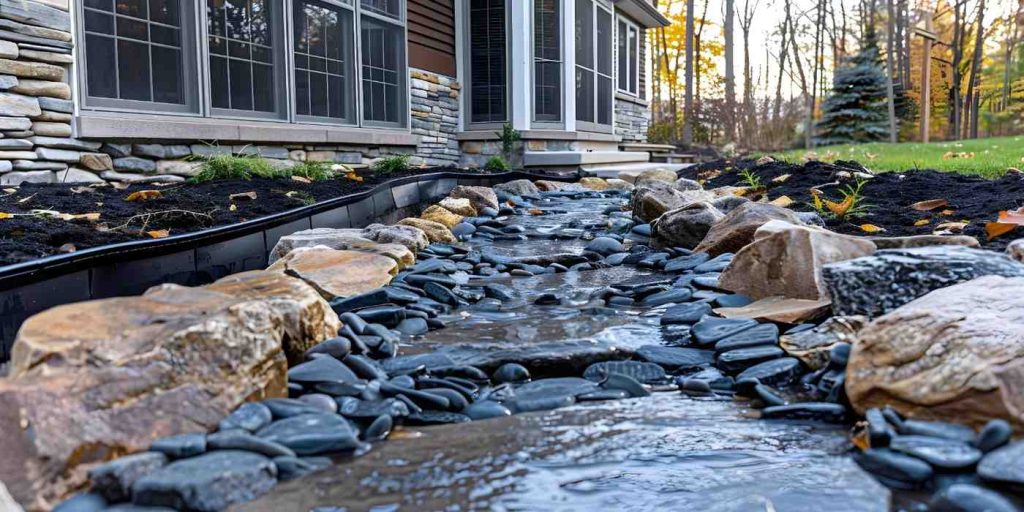
The main job of a drainage ditch is to move collected rainwater away from your lawn and home. By guiding runoff water down a channel, a ditch prevents flooding and soil erosion on your property. The result? Green grass, healthy plants, and a lawn free of mud puddles.
A good drainage ditch design keeps your yard usable and healthy rather than swampy. It spreads rainwater evenly, keeps your yard from being flooded, and makes sure the collected water doesn’t rot your property. On the contrary, poorly managed runoff can flood your lawn, kill your grass and plants, and even crack your home’s foundation.
Standing water also invites pests. Mosquitoes love still water, and soggy yards can develop a routine stench and weed if ignored. Then, there’s also the problem of growing mold and mildew, and the inhabitation of your property by rodents.
In short, a neglected drainage ditch isn’t good for either of the lawn’s beauty or your home’s safety. Solid drainage planning can save homeowners a great deal of headaches and repairs. So, yes, landscaping your ditch is important to protect your home’s foundation, prevent erosion and flooding, and keep the value of your property intact.
Anxious about taking on the task of giving your drainage ditch a makeover? Don’t worry; it’s a lot simpler than you might think. Let’s take a look at the simple yet effective drainage ditch ideas to make your ditch a hundred times better.
You know what the drainage ditch does, and how important it is to keep it well-maintained. Now for the fun part: turning it into a feature of your property with proper drainage ditch landscaping.
You have tons of options to do it, even on a small city or suburban lot. The key is to blend form and function: keep water flowing, but make it look visually appealing. Here are a few drainage ditch landscaping ideas I’d suggest to get you started.
This is perhaps one of the simplest landscaping ideas for drainage. Smoothing out the ditch with river ricks and crushed stone both look neat and stabilize the soil, thus slowing the erosion. A bed of mixed pebbles can mimic a natural creek and turn the most boring of trenches into a design feature.
My personal favourite is filling the drainage ditch in front of the house with round river rocks to create the illusion of a dry riverbed, then edging it with flat stones for definition. The stones absorb water into the ground, helping the ditch do its job while also giving it a flowing river style. If you do this, try using stones that match your home’s colors or your garden’s palette so it doesn’t look out of place.
Bold foliage and flowers tame the harsh lines of a ditch and help it soak up extra water. Native grasses, ferns, sedges, and wildflowers like daylilies or irises thrive in damp soil. Ornamental grasses will also sway in the breeze and cover the ditch edges, while flowers add splashes of colour to the entire landscape. Even mosses and low groundcover plants work well in shadier ditches. Plus, because these plants tolerate wet feet well, you probably won’t have to baby them after every rain.
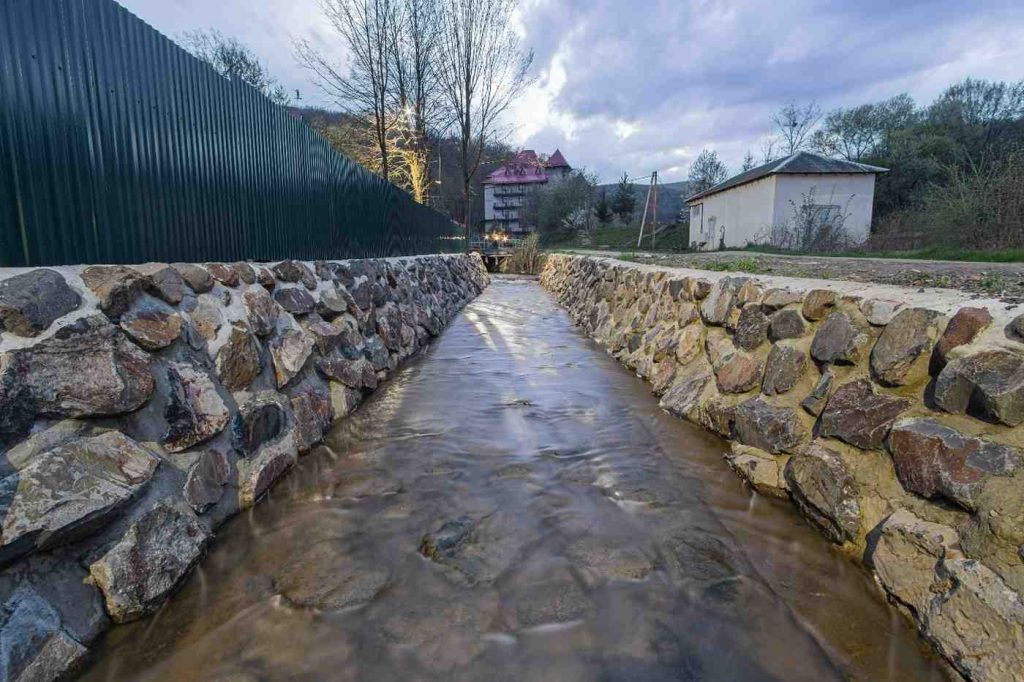
Rather than turning everything green, giving your ditch a crisp outline by lining its sides might be a better idea. You can use bricks, concrete edging, pavers, or even more rocks to border the ditch.
These borders not only keep the soil and mulch in place, but also look clean and intentional. You’ll be surprised by how big a difference a simple border makes. A clear border takes the feeling of ‘just a ditch’ and turns it into a ‘planned garden bed.’
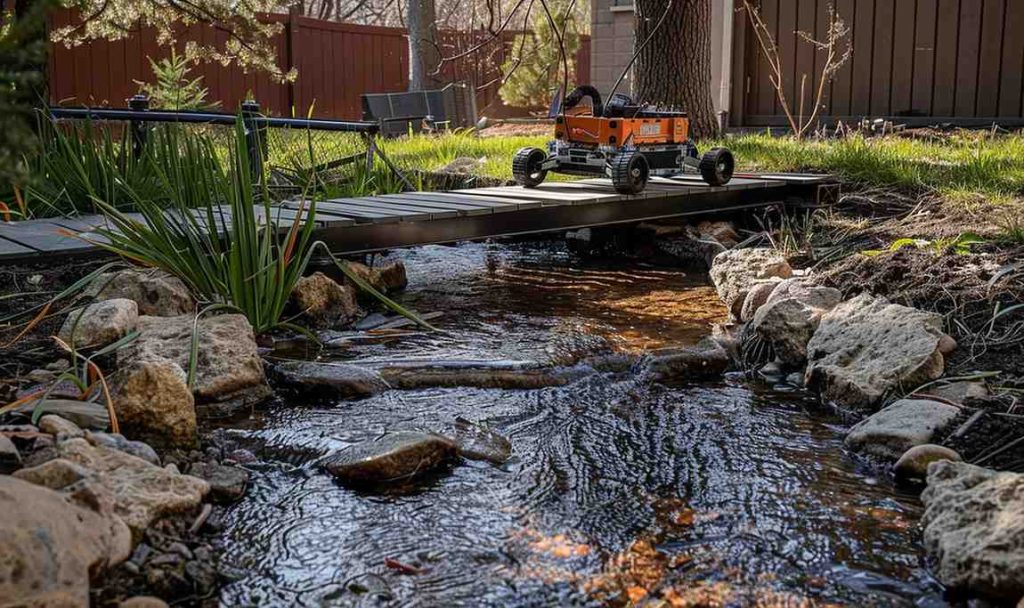
Particularly when working with wider ditches, you can add a fun twist in the form of a low wooden bridge or stepping stones across it. A short footbridge with a handrail can give your ditch the illusion of being a river. If a bridge feels like too much, I suggest using a series of flat stones as stepping stones that let you cross safely.
You could accent this with a trellis or an arch covered in vines over the crossing to add an extra pinch of that forest charm. These features add depth and make your yard a lot more appealing. Plus, your guests will love clambering over that quaint little bridge.
Want to turn part of your ditch into a cascading feature? Add a small waterfall. It helps keep the water moving (preventing mosquito infestation) and provides a soothing trickle sound that makes your garden feel like a serene heaven. Waterfalls also promote good drainage by utilizing and absorbing any excess runoff water.
If not a proper waterfall, even a bubble or fountain at one end of the ditch would work equally well. One thing to note is that it works best if you already have a pump, or if your ditch has a slope, with the water flowing down naturally. The result is a stream that adds a wonderful touch of beauty blended with functionality to your drainage ditch.
If you ask me, containers are massively underrated. Placing a few colorful potted plants right by, or even in the ditch, adds an instant pop to your landscape. Flower pots are super-easy to handle. You can move them around freely and switch them for your favorite blossoms every season.
Another great idea? Use wide, shallow pots on each side of your ditch and fill them with annuals or perennials that like sun or shade, depending on where your ditch sits. Surround them with mulch or shredded bark to warm up the look and prevent the buildup of weeds.
Potted plants are a great way to enhance the appeal of your ditch without much hassle or extravagant costs.
If you’ve decided to give your drainage ditch a makeover, don’t play it safe. Feel free to experiment with different pots, colors, and plants to express your style. A pro designer tip from my side would be to combine textures: a bit of gravel, some wood chips or mulch, different sizes of rocks, and even patches of groundcover. You can even combine pebbles, large rocks, ferns, and ornamental moss in or around your ditch.
For example: group several stones of different sizes together on one side, with a fern or two tucked in. On the other side, use wood chips and groundcover. This approach does a great job of breaking the monotony and making your landscape stand out.
If you don’t want to deal with an open trench all the time, a grate can hide the worst of it. A sturdy metal or plastic grate covers the drain while still letting the water in. You’ll find grates in different materials, colours, and coatings to match both your front yard and backyard.
In a drainage ditch in front of the house, especially, I’d suggest a neat griller flush with the ground to keep leaves and twigs out and make the area look more polished. As far as backyard drainage ditch ideas are concerned, you have a lot more flexibility, and can even pave up to the grate with stones so it vanishes almost completely.
I admit, extras like bird feeders, butterfly plants, or rain barrels can look a bit cheesy, but don’t undermine their importance in improving your landscape’s aesthetics. Hanging a bird feeder or placing a birdbath near the ditch will attract feathered friends, turning your ditch into a mini wildlife hangout spot.
Rain barrels are another fun addition. Position a decorative barrel at the downspout end of the ditch to collect any runoff from your roof. Not only does a rain barrel look nice, but it also gives you free water to be used for gardening later.
All of these additions to a drainage ditch are nice and fancy, but no ditch can remain in good condition if you don’t get the basics right. Once your ditch landscaping is done, keep it that way, but take good care of the setup.
These little chores make your drainage ditch landscaping project a true success, keeping your drainage system and the ditch itself neat and functional. With these ideas, your drainage ditch will look more like a planned creek or garden feature and less like a boring hole. You can mix and match any suggestions that fit your space: even on a narrow city yard, a few stones and a nice plant go a long way.
No matter what ideas for a drainage ditch you go for, the goal is to have fun with it, while making sure water still flows away from your home. A well-landscaped ditch will complement the rest of your yard. Who knows? It might also become a good conversation starter at gatherings.
Turning that plain ol’ drainage ditch into a pretty landscape feature is much easier than you might think. By adding simple elements like stones, plants, and even a small bridge, you can protect your property and boost curb appeal at the same time.
Don’t be daunted by the task of giving your lawn a makeover. It’s a smooth process once you’ve got the fundamentals down. Plus, if you do get stuck, a professional landscape design consultant like Johansson Design can help you turn problems into solutions in no time.
Drainage ditch landscaping focuses on shaping, planting, and reinforcing a ditch so water flows properly without erosion. Done right, it prevents flooding, protects soil, and upgrades curb appeal. Think function-first design that quietly handles runoff while not making your yard look abandoned.
Good drainage ditch design prioritizes slope, soil type, water volume, and outlet direction. Aesthetic choices come last. If water can’t flow freely, plants and stones won’t save you. Design failures usually come from ignoring hydraulics and focusing too much on appearances.
A drainage ditch in front of the house should look intentional, not neglected. Use clean edging, uniform stone, or grass-lined swales to guide water discreetly. Visibility matters here. The objective is protection from runoff without advertising that your property has drainage issues.
To understand how to landscape a drainage ditch properly, prioritize open flow paths. Use spaced plantings, anchored rocks, and erosion-control fabric. Avoid dense shrubs or decorative barriers. Every design decision should support water movement first and visual appeal second.
Plants are safe in drainage ditch landscaping when chosen carefully. Deep-rooted grasses and water-tolerant ground cover stabilize soil without blocking flow. Avoid trees or invasive species. Plants should reinforce structure, not compete with water movement or cause long-term maintenance headaches.