10 Commercial Landscaping Design Ideas to Transform Office and Retail Properties
26 December, 2025
⚪
Johansson
Home > Blog > This Blog
Commercial building landscaping is the art of designing attractive spaces around office buildings, shops, and other business properties. A well-designed landscape creates a welcoming first impression and conveys a sense of professionalism and trust.
In fact, statistics show that professional landscaping can raise a property’s value by about 15-20%. That’s a big raise. Tasteful greenery and hardscape elements in your landscape grab attention and signal quality to anyone visiting the property.
The right plants, pathways, and other landscape features all work together to make your office or retail property look cared-for, and pay off in the form of higher property value and happy clients.Not only that, after spending a prolonged period of time indoors during the COVID-19 pandemic, people now want to spend more time outdoors, in pleasant environments. A green building exterior would attract people and make them want to go inside. One study found that retail centers with good landscaping see customers spending roughly 12% more on shopping. This way, landscape design for commercial buildings plays with textbook elements of human psychology.
Investing in commercial building landscape design is a great way for businesses to make sure their properties shine and capture eyeballs. Let’s see the benefits of commercial landscapes that can help your property stand out.

A neat and attractive landscape does wonders for a property’s value and resale price. Both prospective customers and tenants would instantly notice the difference, and are often willing to pay a higher price for a beautiful curb. So, spending on trees, flowers, and hardscape often returns substantial money when selling or leasing the property.
Curb appeal is how your property looks from the street. Make no mistake, these first impressions count. 92% of real estate professionals say they recommend sprucing up the curb appeal before putting a property on the market. Even for a retail store, an entrance beautified by landscape design for commercial buildings can attract more visitors. If customers drive or walk by, they should notice well-kept flower beds and clean walkways, encouraging them to come in. Good landscape design and maintenance sends the message that the business is professional and of high quality.
The way your building looks outside says a lot about your brand. Lush plants, modern planters, or a sleek fountain can reinforce a company’s image. For example, a tech company might use a minimalist design with native plants to show eco-friendliness. A hotel or retailer might use colorful gardens and lighting to feel luxurious. By customizing landscaping to match the company’s style, businesses create a consistent, memorable brand experience. It tells customers “we care about the details,” which builds trust and makes the brand feel higher-end.
Smart landscaping can save energy. Trees, shrubs, and vines can act as natural air-conditioners or heaters. By shading a building, trees can cut cooling costs in summer; by blocking wind, they can cut heating costs in winter. In fact, well-placed trees can save up to 25% of a building’s energy use. This means lower utility bills. For example, planting a line of evergreens on the windy side of a building (a windbreak) can reduce heating needs. Or planting leafy trees near windows can block the hot sun. Over time, these savings add up, making landscaping both pretty and practical.

The human brain is wired in such a way that nature automatically makes us feel better. Studies show that office workers feel more productive and less stressed with plants around their workplace. In one study, adding plants to office spaces and curbs boosted workers’ productivity by about 15%. These natural elements give people a mental break from screens and help them relax. Happier and less stressed employees tend to enjoy their work more and take fewer sick days. This way, commercial landscaping services can subtly improve mood and morale.
Lastly, a thoughtfully designed landscape improves the overall customer experience of your business. Walking into a building past flower beds or miniature fountains makes customers feel special. It can calm nerves (for example, before a meeting with the bank manager) and build excitement (for a retail store). Outdoor seating areas with shade or a water feature can serve as gathering spots, where shoppers or clients can spend some extra time. For retail properties, that extra time often means extra sales. For office properties, a good environment impresses clients and partners during visits. In any case, landscape maintenance is an investment in creating a positive environment around your building.
Long story short, landscape design for commercial buildings increases property value, cuts energy bills, and makes both customers and employees happy, making it an eco-friendly investment that definitely pays off.
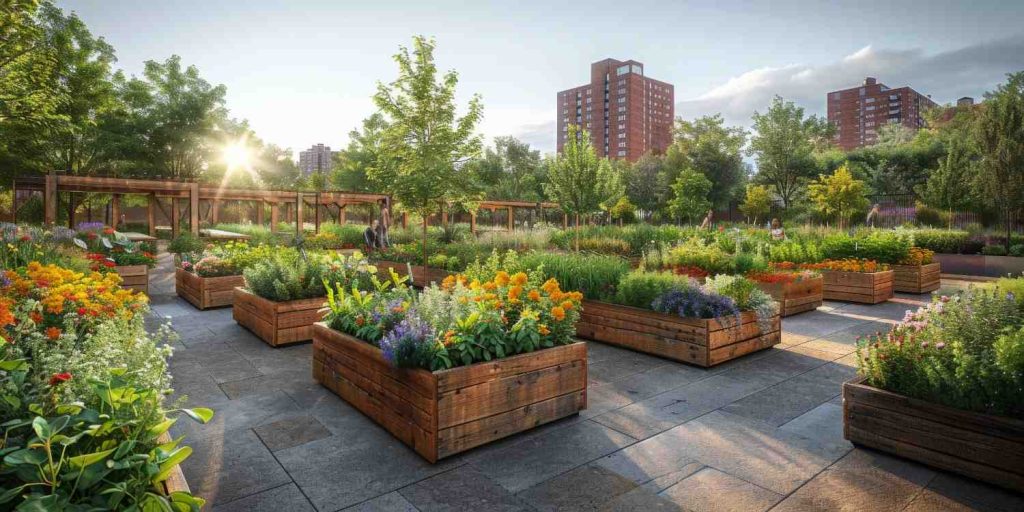
Add colorful flower beds along walkways or near the entrance. Bright blooms and neatly trimmed shrubs grab attention and enhance the aesthetic appeal of your space. Use your brand or building colors in the flowers to create a memorable look. Flower beds frame doors and windows, making the façade pop. Flower beds can also complement each season: spring tulips, summer annuals, fall mums, or winter evergreens. Well-placed flower beds also soften hard concrete and stone elements, giving your curb a soft, warm, and welcoming feel.
Vertical gardens attach plants to walls or structures, turning empty space into lush scenery. Such landscape design ideas for commercial buildings are great for urban properties with little ground space. A vertical garden can cover a bare wall or fence, adding rich textures of vines or succulents. It not only looks amazing but also cools the wall behind it. Customers and employees love seeing plants and gardens in an urban area. Plus, it can improve air quality in and around the building.

Keep modifying your landscape all year. Switch plants and flowers with the seasons so there’s always something fresh to see. For example, plant bulbs and early blooms for spring, then colorful annuals for summer and fall. In winter, use evergreens or decorative grasses to add interest. Seasonal rotations prevent the yard from looking dull. It shows that your business takes pride in its appearance year-round. Customers will notice blooming flowers in spring or festive planters in winter. This continual renewal makes the property feel alive and vibrant.
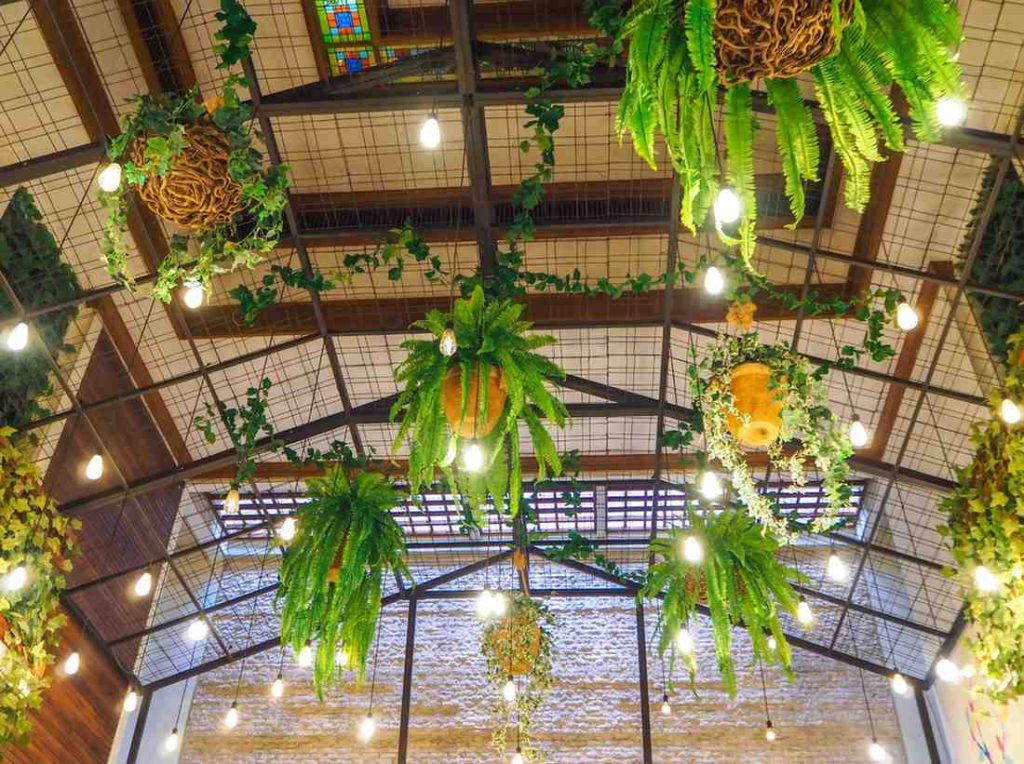
A commercial landscaping design that looks great during the daytime but fails under the night sky is of no use. It has to look great throughout the day. For that, install soft lights along paths, uplights under trees, and lanterns by the entrance. Decorative lighting highlights the building and gardens at night, making the property look inviting and safer after dark. Good lighting extends the life of your landscape into evening hours. A shop lit by glowing planters and spotlights feels open for business late. Lighting also draws attention to special features like statues or large shrubs. In short, lighting adds beauty and function.
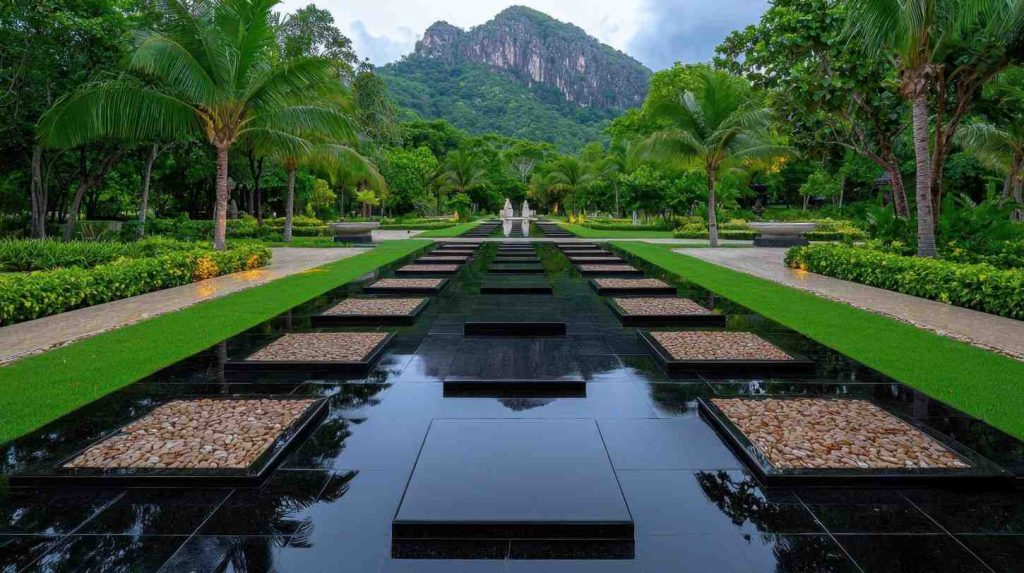
A fountain, pond, or waterfall can become a focal point of your commercial space. Moving water catches the eye and soothes the ear. Place a fountain near the lobby or in front of a plaza. The gentle sound of water creates a peaceful atmosphere for visitors and passersby. Water features also attract birds and other wildlife, adding a bit of nature to the scene. Modern offices and stores use geometric fountains or sleek reflecting pools for a professional look. Others might use a natural pond with koi or aquatic plants for a calmer vibe. Either way, a water element makes the landscape memorable and relaxing.
A rain garden is a planted area designed to capture runoff from roofs or parking lots. Instead of stormwater running off into the street, it soaks into special plants and gravel, turning rainwater that would otherwise have been wasted into an asset. Rain gardens use plants that love moisture, like ferns or ornamental grasses, reducing flooding and erosion. It also filters pollutants from the water before it enters drains. In short, rain gardens protect the environment and solve drainage issues, making them both pretty and practical.
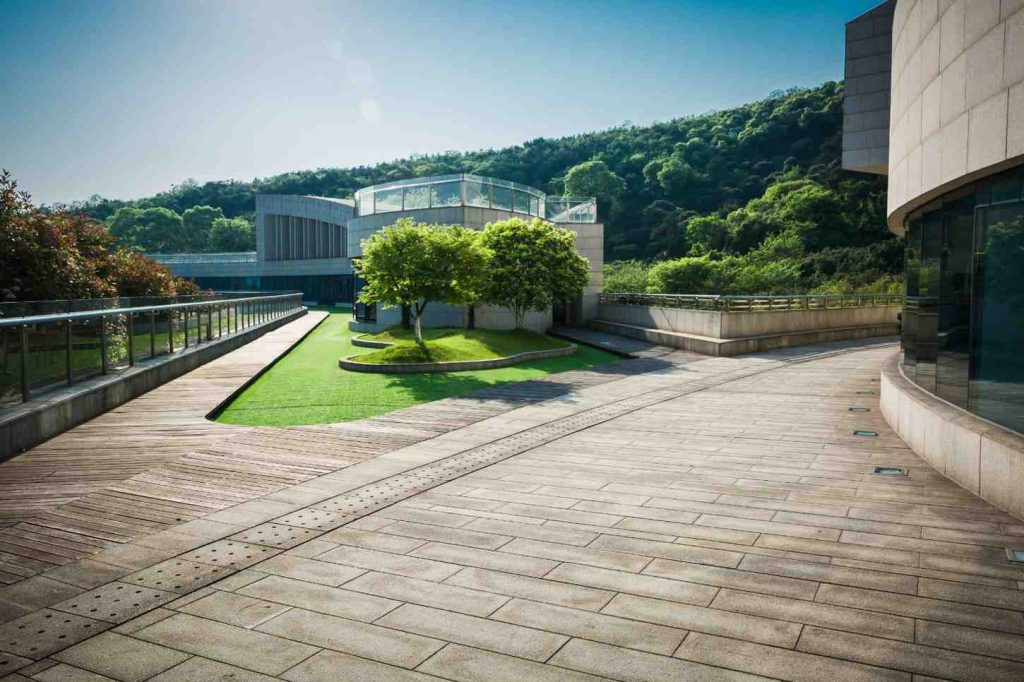
Replace plain concrete with permeable paver stones. These pavers have spaces or are made of porous material so rain can soak through gaps into the ground. They prevent large puddles in parking lots or walkways. Permeable pavers reduce runoff, which is better for local water systems. They also add texture to a plain asphalt lot with brick, cobblestone, or patterned stone. This means parking areas and drives can handle heavy rain more gracefully. Your property looks polished, and you don’t have to stand in the collected water, keeping walkways safe and clean.
Use trees and tall shrubs as shields against strong winds. In many areas, winds can drive rain and make outdoor spaces chilly. A row of evergreens or bamboo can form a natural wall on the windy side of the building. This protects people at the entrance and outdoor seating from cold gusts. It also lowers heating costs inside by breaking the wind before it hits the walls. In winter, think of them as green winter coats for your property. To make windbreaks look their best, choose plants that keep their leaves full year-round (like cedars or pines), so they look good in every season.
Landscaping can cut down city noise. Thick hedges, berms (small earthen mounds), or walls covered in plants absorb sound from traffic and neighbors. For example, a dense row of shrubs along a busy road helps muffle car noise. You might also plant tall ornamental grasses or trees to block sound. This creates a quieter outdoor area for employees or customers. A peaceful plaza with less noise lets people talk and relax outdoors more comfortably. Customers waiting outside a store or dining in a café will enjoy the quieter space. Overall, noise buffers improve the atmosphere around a busy building.

Give employees (and sometimes customers) a cool place to take a break. Add patio seating under trees or pergolas with climbing vines. In the summer heat, a shaded outdoor area is a blessing. Employees can eat lunch outside or have casual meetings in the fresh air. Retailers can use these spots to draw in visitors (like a bench under a canopy of trees). You can also install sail shades or umbrellas over seating for more shade. Shaded areas make your property more functional by extending usable space. At the same time, strategically planted shade trees (deciduous ones that drop leaves in winter) help cool the building and reduce air-conditioning use.
Each of these ideas does two things: it beautifies commercial properties and also adds value or function. After all, a good commercial landscape architect shouldn’t just act as a decoration, but also make the space better for the people and the planet.
In conclusion, we can say that commercial landscaping design for an office or a retail property is definitely a good investment. It boosts curb appeal, raises the property value, and even helps cut down on utility costs. Studies show that commercial properties with well-designed and maintained landscapes can earn about 7% more rental income. This is a big win, which shows that professional commercial landscaping can make a place more attractive as well as more profitable.
For businesses, the verdict is clear: hire commercial landscaping companies like Johansson Design and make your landscape work for you. A great modern commercial landscape design gives clients and customers a welcoming feel, and also provides a pleasant outdoor spot for employees. Over time, these improvements pay off in the form of a stronger brand image and a morale boost to the bottom line. Investing in landscaping isn’t about planting pretty plants; it’s a way to make your property a better experience for everyone.
Landscape design for commercial buildings means planning and arranging the outdoor space around offices, stores, and other businesses. It includes choosing plants, trees, and features like benches, lighting, or water elements that look nice and fit the business’s needs. The goal is to create a welcoming environment for customers and workers. It also considers practical needs like drainage and access.
Common ideas include flower beds, outdoor lighting, and water features to make a property more beautiful. Many companies add vertical gardens or seasonal color programs so the area looks good year-round. The best functional ideas include rain gardens or permeable pavers to manage stormwater, and shaded seating areas or windbreaks to improve comfort. This mix of decorative and practical elements fits the ideal commercial building landscape design goals.
Smart commercial landscaping creates a strong first impression and reinforces a company’s brand image. A well-designed exterior tells customers your business cares about quality and detail. It also improves customer experience. For example, a shopping center with trees and flowers feels more relaxing, so shoppers stay longer. For office buildings, nice outdoor break areas can boost employee morale. In either case, commercial landscape architecture turns an ordinary property into a memorable space.
Professional landscaping brings multiple benefits. As one source notes, well-maintained commercial landscapes can increase rents as well as customer spending (for retail spaces). This happens because attractive exteriors attract people and reinforce a positive image of your space. Well-placed trees and plants also save energy and improve working conditions. So, a well-designed commercial landscape helps you attract customers, keep employees happy, and add value to the property.
What makes commercial building landscaping different from residential landscaping?
Commercial landscaping often focuses on business goals like brand image and customer experience. For example, a store might use branded signage with planters, or a hotel might have elaborate fountains. The scale can be larger, and regulations might apply (like parking lot drainage). The principles are the same: beauty and function, but commercial landscapes are tuned to fit a company’s needs and public use.