How to Make a Small Backyard Look Bigger? 12 Best Ideas to Try
7 February, 2026
⚪
Johansson
Home > Blog > This Blog
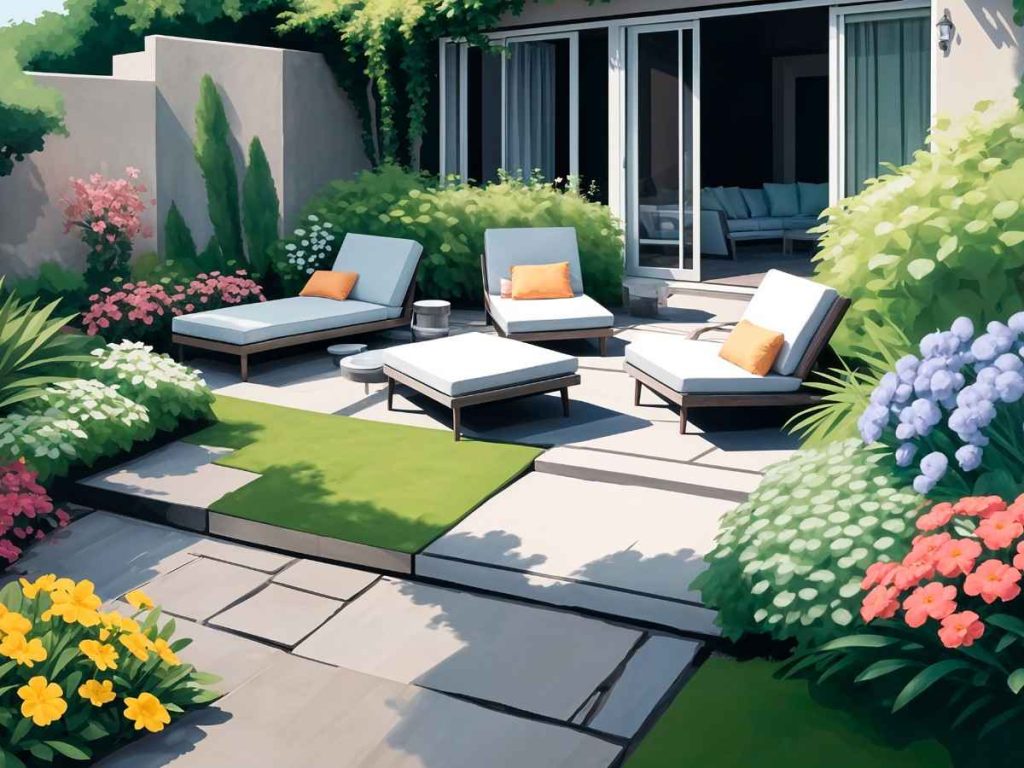
Twenty-three years in landscape design have taught me something that catches most homeowners off guard. Small backyards? They are almost never actually too small. What they are is poorly planned.
I have worked on narrow townhome strips, compact city gardens, and suburban patches that owners had completely given up on. The conversations always started the same way. "There is nothing we can do here." But apply the right small backyard landscaping ideas, and those same spaces start to breathe.
A 2024 survey found that roughly 66% of Americans want a yard larger than half an acre. Meanwhile, lot sizes keep shrinking, particularly in high-demand markets. The average lot in California, Maryland, and New Jersey is well under a quarter of an acre.
That gap is exactly why understanding how to make a small backyard look bigger matters. This is not about magic tricks or expensive renovations. It is about working with perception, not against it.
When clients first reach out asking how to make my yard look better, they rarely complain about actual measurements. Instead, they describe feelings. The space feels cramped. There is no natural flow. The furniture seems awkward. Plants overwhelm everything.
The culprit is almost always the same. Too many ideas crammed into too little space. Think about what typically happens. A homeowner looks at the backyard and starts imagining possibilities. A dining area. A lounge spot. A fire pit. Garden beds. Storage. A play area. Before long, that modest rectangle is expected to perform six different functions simultaneously.
The result? A backyard space that technically has everything but feels comfortable doing nothing. Over-scaled furniture fights for room with random plant selections. Hard edges create visual barriers. Materials clash. And because no single purpose was prioritized, the whole space reads as cluttered with competing intentions.
I’ll repeat what most design and landscaping experts already know: Our visual perception of space is highly manipulable. Certain techniques make areas feel confined, while others expand them dramatically. That expansion depends far more on design decisions than on actual square footage.
In my practice, making a small backyard appear bigger has always been less about adding features and more about editing and directing the eye with intention.

Before touching plants, furniture, or materials, I ask every client: what do you actually want to do out here in your small garden?
Pick one primary function. Relaxing. Hosting small dinners. Growing vegetables. Whatever genuinely matters most. Once that anchor is set, every subsequent decision has direction. The space immediately feels less chaotic because it is no longer trying to be everything at once.
Here is a myth worth busting. Dividing a small space does not make it feel smaller. Done thoughtfully, zoning adds structure and dimension.
Rather than treating your backyard as one undifferentiated rectangle, create subtle distinctions. Use furniture placement, changes in ground material, plant groupings, or slight elevation shifts to guide the eye through different areas.
These zones do not need walls or hard divisions. Gradual transitions actually work better in compact spaces. On several projects, simple zoning has made backyards feel twice as large without changing a single measurement.
When ground space is limited, vertical space becomes valuable real estate. Fences, walls, and boundaries often get ignored, but they have an enormous influence on how enclosed a backyard feels.
Cover fences with climbing plants, install vertical garden systems, use tall narrow planters, and mount lighting on walls. The key is drawing the eye upward so attention shifts away from the constrained floor area. Vertical gardening in small spaces adds greenery without sacrificing precious ground.
Planting choices can either expand a backyard or overwhelm it. Bushy plants with dense foliage tend to dominate compact areas. They look attractive initially, but make yards feel boxed in over time.
I suggest upright forms with fine textures. Layer plantings by height: low options in front, medium in the middle, tall toward boundaries. And repeat a limited palette rather than introducing endless variety.
That repetition creates rhythm and moves the eye smoothly through the space. Often, simplifying plant choices does more for a small backyard landscape design than adding anything.
The difference between a flat-looking backyard and one that feels expansive is depth. Renaissance painters figured this out centuries ago, and the principle translates directly to outdoor spaces.
Follow a simple rule. Position lower elements closer to your main viewing point, medium-height features in the middle ground, and taller plants or structures toward the back. This gradual progression tricks the eye into perceiving more distance than actually exists.
Design elements like linear perspective, texture variation, and color temperature all contribute to this illusion. Fine-textured, cooler-toned plants at the rear boundaries can make a garden appear to extend well beyond its actual limits.
Color has surprising power over spatial perception. Light and neutral tones reflect more light, making small backyards feel airier. Dark or high-contrast schemes, while dramatic, can weigh down compact spaces.
Solid base colors to consider: soft greys, warm beiges, light stone tones, and natural wood finishes. Accent colors still have a place, but keep them to cushions, planters, and seasonal flowers rather than dominant features.
Consistency matters here. A cohesive color palette makes any backyard look more polished and professional. When colors fight each other, visual chaos follows.
Ground surfaces get overlooked, but they significantly affect perception. Continuous flooring helps the eye travel without interruption, which makes spaces feel larger. Diagonal patterns or materials that visually connect indoor and outdoor areas can amplify this effect.
What to avoid: too many different materials, sharp breaks in paving, and small, busy patterns. Early flooring decisions pay long-term aesthetic dividends, so they deserve real thought rather than afterthought treatment.
For properties dealing with drainage challenges alongside design goals, landscaping challenging spaces often requires addressing both function and appearance together.
Oversized furniture is one of the fastest ways to shrink a small backyard. It sounds obvious, but I see it constantly.
Look for slim-profile pieces with open or raised legs that let sightlines pass through. Multi-purpose furniture, like storage benches, earns extra points for reducing clutter. The goal is furniture that supports movement and ease rather than blocking it. Less furniture, carefully chosen, almost always outperforms more furniture randomly placed.
This principle gives homeowners the most trouble. Emptiness is not wasted space. It lets a design breathe. It makes the elements that remain feel more significant.
When every corner is filled, the eye has nowhere to rest. Paradoxically, that makes spaces feel smaller. The most sophisticated small backyards I have designed all include areas of deliberate openness.
Outdoor lighting for small backyard applications extends beyond just making the space usable after dark. Lighting also shapes perception.
Soft, warm lights positioned at the perimeter draw the eye outward, expanding visual boundaries. Uplighting on plants or walls pulls attention upward rather than down to the limited floor. Good lighting strategies include low-level path lights, wall-mounted ambient fixtures, and subtle accent lighting on focal features.
When thinking about how to design your backyard for evening use, smart lighting makes the space feel significantly more generous after sunset.
Giving the eye a destination creates structure and depth. Choose one feature that draws focus. A small water element. A fire bowl. A statement planter. A built-in seating nook.
When attention gets pulled deliberately inward, the surrounding space automatically reads as deeper and more organized. Multiple competing focal points create the opposite effect.
In fact, if you look at many award-winning compact outdoor spaces, you’ll see that they demonstrate how a single strong feature anchors a design more effectively than scattered elements.
Hard edges and solid fences can make your small backyard feel like boxes. Softening those boundaries with semi-transparent screens or plants that blur where the yard ends creates an impression of openness.
You do not need to remove fencing entirely. Simply breaking up the visual rigidity helps. Climbing vines, strategically placed shrubs, or lattice panels that filter rather than block views all work.
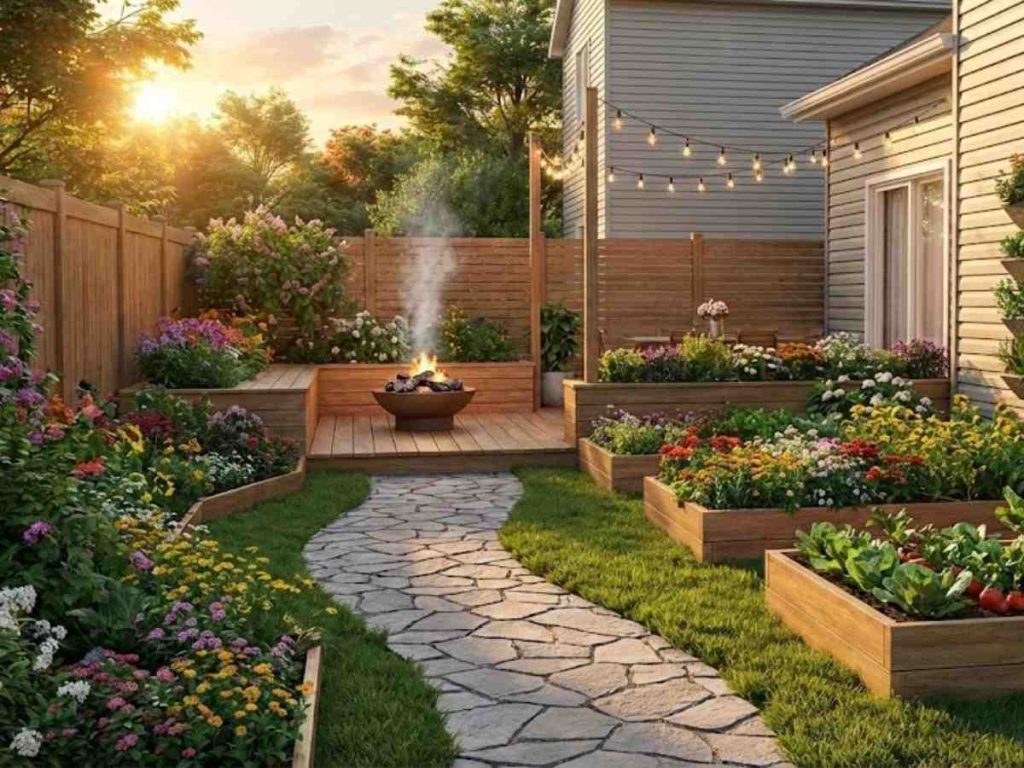
A beautifully designed small backyard will not stay that way without upkeep. Overgrown, cluttered, or neglected spaces always feel smaller than they are.
Implement the aforementioned small backyard ideas with maintenance in mind from the start. Choose plants appropriate for your climate and commitment level. Use durable materials that age well. Keep layouts simple enough to actually maintain.
The data support this approach. According to industry research on landscaping ROI, well-maintained landscapes deliver a 217% return on lawn care investments at resale. Strategic landscaping overall can increase home values by 15% to 20%. That return depends on ongoing care, not just initial installation.
An easy-to-maintain design is a design that gets used and enjoyed. And regular use keeps spaces feeling alive rather than abandoned.
For homeowners considering professional help with strategic landscape planning, even a single consultation can prevent costly mistakes and help prioritize the right improvements.
After more than two decades in this field, I can say confidently that small backyards produce some of the most rewarding design outcomes. Constraints force clarity. They demand intentionality. And when that intentionality shows up in the finished space, the result feels personal, functional, and surprisingly spacious.
The shift happens when you stop focusing on what you cannot fit and start focusing on how you want the space to feel. Square footage matters far less than purpose. Small backyard landscaping ideas are not about cramming more in. They are about stripping away what does not serve you and letting what remains actually work.
While the ideas I suggested in the blog are fairly easy to implement yourself, it’s always best to have an expert by your side if you feel the slightest bit of apprehension. Give us a call at Johansson Design, and let our outdoor design and landscaping experts guide you through your backyard’s makeover.
Trying to include too many features. Overcrowding is the fastest way to make any space feel smaller. Pick one primary purpose and design around it rather than attempting to accommodate every possible function.
Absolutely. Luxury comes from quality materials, thoughtful lighting, and intentional design, not from size. Some of the most elegant outdoor spaces I have worked on measured under 300 square feet.
Yes. They add greenery and visual interest without consuming floor space. Vertical elements also draw the eye upward, which reduces focus on a limited ground area. For small backyards, going vertical is one of the most effective strategies available.
Often, yes. Even brief guidance from an experienced designer can prevent expensive mistakes and ensure you prioritize the changes that will have the most impact. Small spaces leave little room for error, so getting it right the first time matters.
Some changes are immediate. Decluttering, rearranging furniture, or adding better lighting can shift how a backyard feels within a single afternoon. Larger projects like planting or hardscaping take longer but typically show meaningful progress within one growing season.