Boutique Interior Design Ideas That Turn Browsers into Buyers
2 February, 2026
⚪
Johansson
Home > Blog > This Blog
Physical retail stores see conversion rates between 20-40%, dramatically higher than the 1-3% typical of e-commerce platforms. A well-designed boutique can increase customer dwell time by 3-5 minutes and boost impulse purchases by 15-25%, while poor boutique design ideas send potential buyers to the exit.
I've studied hundreds of successful boutiques, from minimalist Scandinavian fashion stores to maximalist jewelry shops. Certain boutique interior design ideas consistently drive sales, while others kill conversion rates.
This guide breaks down those boutique decorating ideas with real boutique store examples, specific measurements, and actionable boutique setup ideas you can implement tomorrow.

Lighting does more than illuminate your boutique; it directs attention, sets the mood, and makes products look their absolute best. The three-tier approach works across successful boutique interior design: ambient lighting for overall illumination, task lighting for functional areas, and accent lighting to spotlight merchandise.
Real Boutique Store Example: Aesop Melbourne
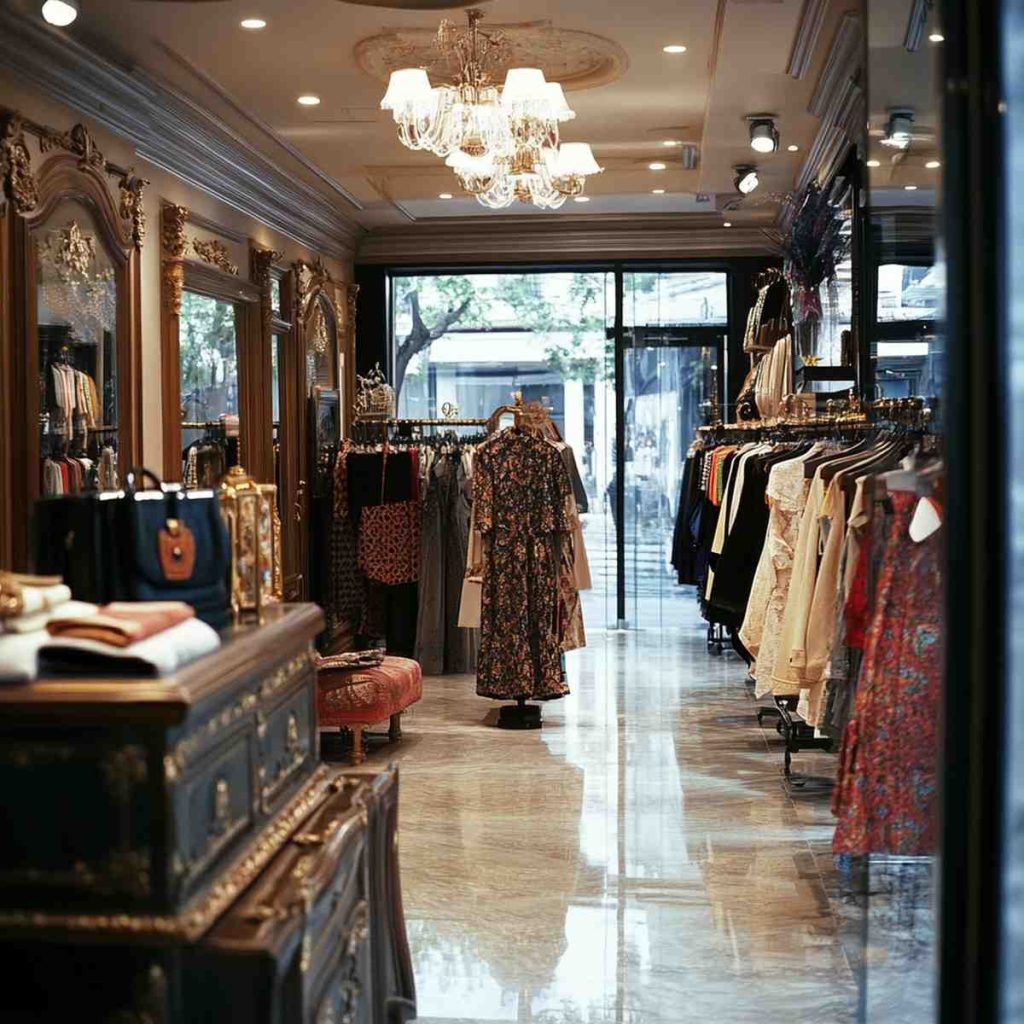
Aesop's Melbourne stores demonstrate this boutique lighting idea perfectly. Their designers use soft, warm ambient lighting throughout the space.
Custom wall fixtures produce a soft glow that enhances oak wood panels while spotlighting individual product displays. The lighting serves the products, never competing.
For clothing boutique interior design, warm LED lighting (2700-3000K) shows fabrics accurately. Jewelry boutique design needs focused spotlights that make metals sparkle. Beauty boutiques benefit from cooler lighting (3500-4000K) for color accuracy.
Boutique Setup Ideas for Implementation:

The Glossier SoHo flagship at 123 Lafayette Street in New York shows how boutique layout ideas can become your silent salesperson.
When Gachot Studios designed the 5,500-square-foot space, they made the staircase the hero element. That dramatic red quartz staircase creates anticipation and guides traffic flow naturally through the boutique store layout.
The decompression zone matters most. Give customers 5-10 feet of breathing room past your entrance. Place a visually striking but non-commercial display here, fresh flowers, art, or brand story elements. Product-heavy displays in this zone get ignored.
Loop layouts work well for boutiques between 500 and 1500 square feet, creating a clear path through your space. Most shoppers turn right when entering, so position your power wall on that right-hand wall immediately after the decompression zone.
Free-flow boutique layout ideas suit smaller boutiques where browsing matters more. Baltic Club in Montreal maximized its 10-foot-wide space with curving displays. The curved fixtures make the narrow space feel deliberate.
Green Qween, a cannabis boutique in Downtown Los Angeles, proves that boutique decorating ideas should extend beyond visual elements.
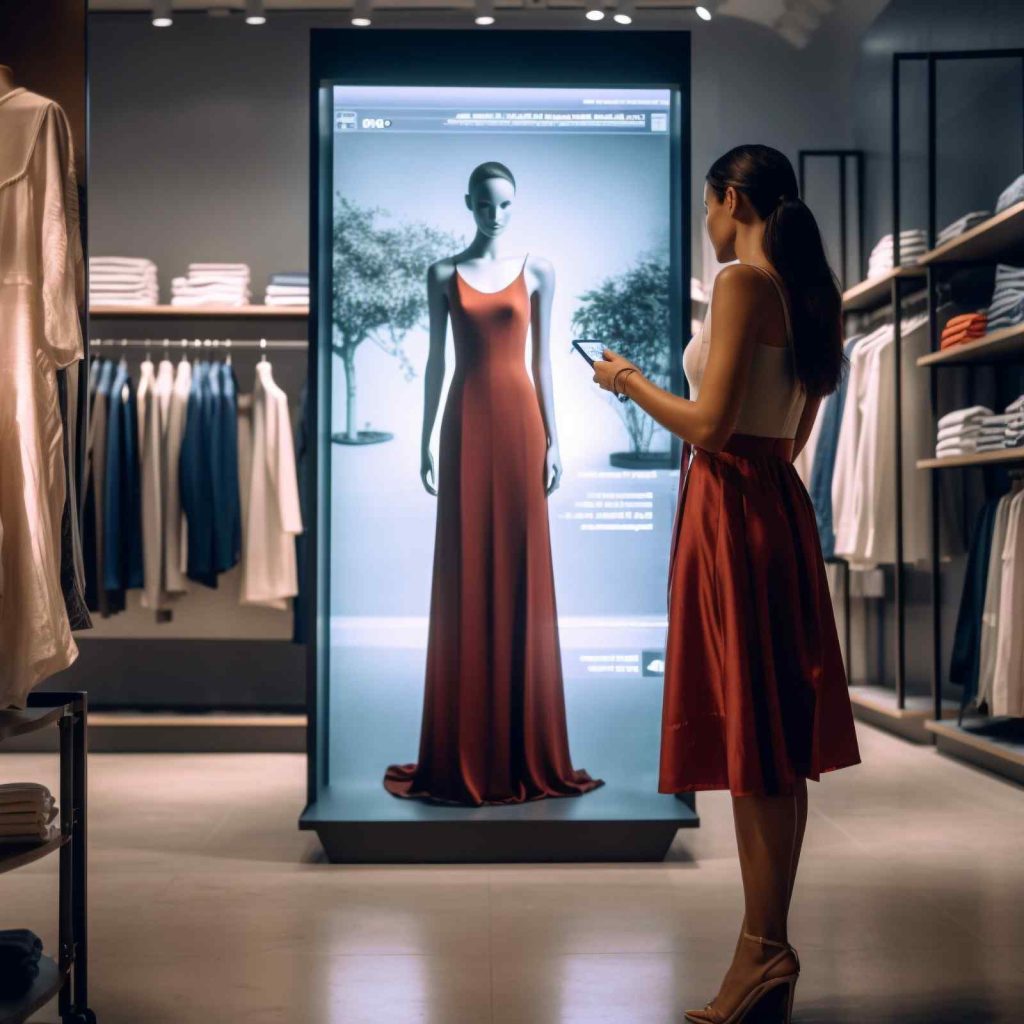
SevenPoints Interiors created an environment where apricot and mint fluted metal displays, a light-reflecting disco ball, and crisp geometry reference queer history while creating a welcoming atmosphere.
Materials in your boutique interior design communicate before customers consciously register them. Carpeted floors create quiet, serene experiences ideal for luxury boutique design. Tile or polished concrete reads as modern and energetic. Wood flooring signals natural or artisanal brands.
Scent and sound complete the multi-sensory boutique decorating idea. Aesop stores incorporate signature fragrances subtly. Upbeat music (120-130 BPM) encourages browsing in fashion boutiques, while slower soundscapes (60-90 BPM) work better for luxury goods.
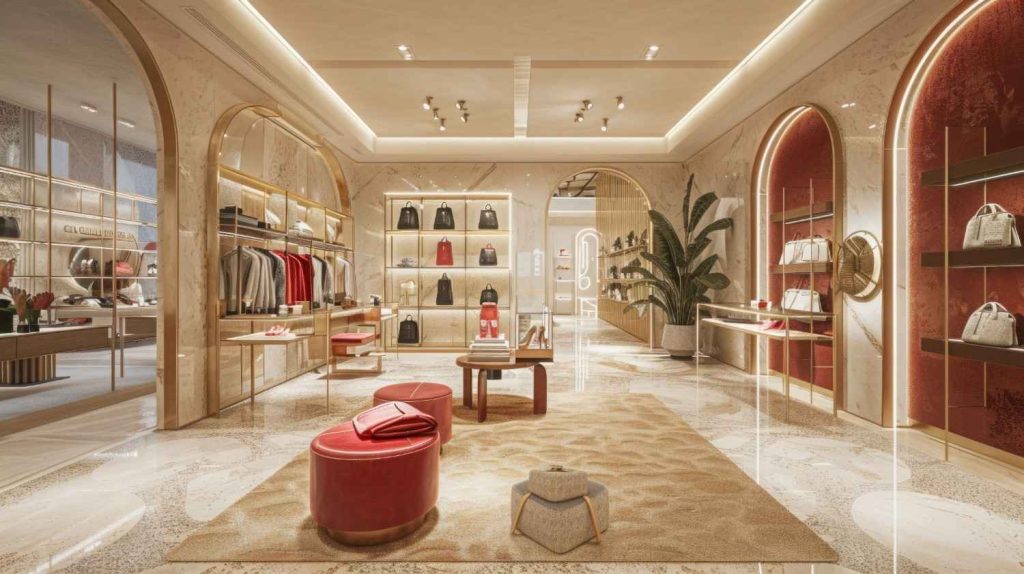
Baltic Club's Montreal location demonstrates how small boutique interior design ideas beat square footage. Working with a space just 10 feet wide, IvyStudio architects inserted curving displays inspired by the store's products.
The curved fixtures create a distinctive experience despite the constraint, one of the best boutique layout ideas for narrow spaces.
Vertical space becomes critical in small boutique setup ideas. Floor-to-ceiling shelving displays more inventory without eating floor space. Mirrors expand perceived space; a full-length mirror can make 300 square feet feel like 500.
Multi-functional furniture maximizes limited space. Display tables that double as checkout counters, benches with hidden storage, or wheeled racks that reconfigure for events.
Critical measurement: Maintain 42-48 inches between fixtures for comfortable browsing. Fewer triggers the "butt-brush effect"; shoppers abandon aisles entirely when space feels invaded.
Glossier built an empire partly on signature pink in its boutique interior design. Their stores use soft, pastel pink plaster as both brand reinforcement and psychological tool, creating the calm, approachable atmosphere that matches their "skin first, makeup second" philosophy.

Color psychology research shows earthy neutrals, terracotta, ochre, sage green, create grounding, calming effects in boutique decorating ideas. Deep jewel tones like burgundy, navy, and emerald add sophistication and work well for luxury boutique design.
Brand alignment matters more than trends in boutique setup ideas. A surf shop using burgundy sends confused signals. Your color palette should support your brand narrative in every boutique interior design choice.
Practical boutique decorating idea:
Aesop has made sustainable, locally sourced materials a signature across their 300+ boutique store examples. Their Thonglor location in Bangkok reused existing wood from the site.
The Salzburg store features a basin from local Nagelfluh stone, while Chicago uses reclaimed bricks. Each boutique interior design reflects its location while maintaining brand consistency.
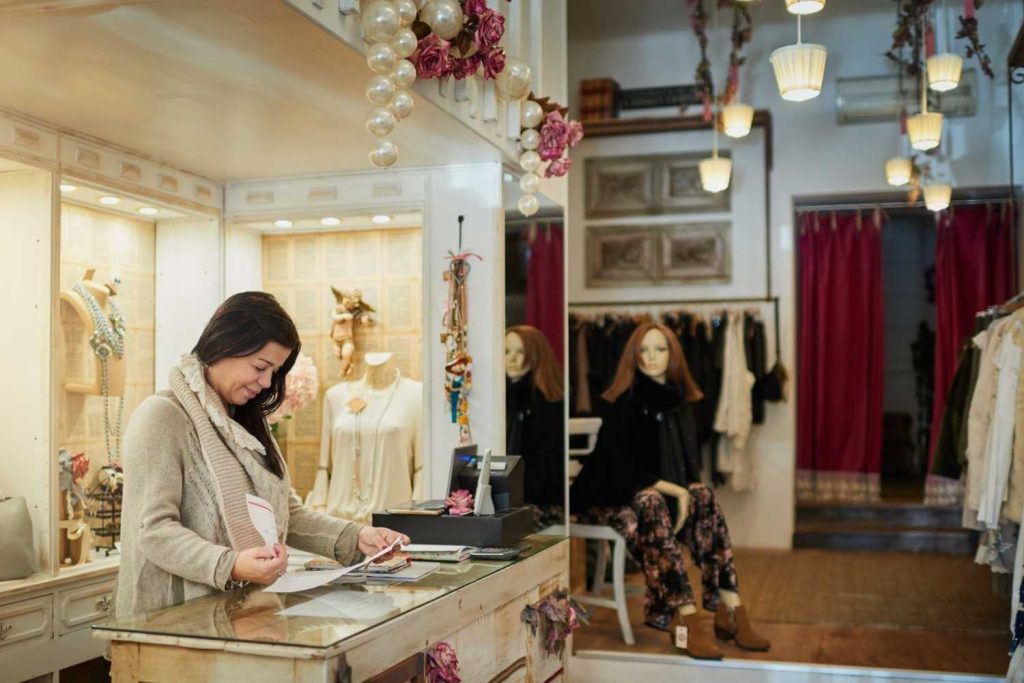
This boutique design idea reduces environmental impact while creating an authentic connection. 43% of designers say their 2025 projects have sustainability requirements, and customers increasingly care about sustainable boutique decorating ideas.
Local artisan partnerships add unique character to boutique setup ideas. Commission local woodworkers for shelving, collaborate with artists for murals, or source display props from local makers.
Budget note: Reclaimed wood often costs less than new hardwood. Start with one signature element in your boutique layout idea.
Kit and Ace's Vancouver location demonstrates how flexible boutique design encourages lingering. Clean, modern fixtures reconfigure easily, while comfortable seating and interactive displays invite browsing.
The minimalist approach means seasonal updates don't require complete redesigns; smart boutique setup ideas for any budget.
Modular fixtures give maximum flexibility in boutique layout ideas. Freestanding units on wheels can be repositioned weekly. Adjustable shelving adapts to different product sizes.
Pegboard walls allow infinite configuration changes without permanent modifications, particularly useful for boutique interior design in leased spaces.
Seasonal rotation keeps your boutique decorating ideas fresh without major investments. Swap accent pillows, change artwork, update window displays, or rotate which products get prime real estate in your boutique store layout.
Time-saving boutique design idea: Create three distinct looks you can rotate throughout the year. Document layouts with photos and measurements for easy implementation.
AMPM at DLF Emporio in New Delhi creates what feels like multiple boutiques within one space.
The sanctuary-like boutique interior design features earth-toned walls, an interior courtyard, and minimalist décor that segments the space into distinct zones, one of the most effective boutique layout ideas for larger spaces.

Zoning works well for boutiques carrying diverse product categories. Create visual separation through flooring changes, different lighting intensities, or partial walls in your boutique design. A clothing boutique might zone by style, occasion, or season.
Signage helps, but shouldn't dominate your boutique decorating ideas. Subtle floor markers or strategic product placement can define zones without cluttering the visual landscape.
Conversion boost: Place highest-margin products in back zones. Customers who walk through your entire boutique see more inventory and spend more time browsing, correlating with higher conversion rates.
Merci in Paris turned a concept store into a destination through entrance boutique design ideas.
The space blends industrial elements with warm touches, exposed brick, high ceilings, and large windows, creating an Instagram-worthy environment that drives foot traffic and social media marketing.

Your storefront does two jobs in boutique interior design: attract passersby and communicate brand. Large windows showing your best merchandise act as 24/7 advertising. Lighting displays after hours turn your storefront into nighttime marketing, essential boutique setup ideas for any location.
Entrance thresholds need a minimum of 36 inches in width in boutique layout ideas, 48 inches or better.
Glass doors eliminate the psychological barrier of opening an unknown door while letting your boutique interior design work as marketing; passersby see the environment you've created.
Detail that matters: Door hardware. A beautiful brass handle or custom pull communicates attention to detail from the first touch in your boutique decorating ideas.
Glossier's conveyor belt system in SoHo perfectly illustrates technology boutique design ideas done right. After customers place orders on iPads with staff, pink packages descend via conveyor from the upper-level packaging area.
It's functional, entertaining, and on-brand, the perfect balance for boutique interior design.
QR codes add product information without cluttering displays in boutique setup ideas. Position them on shelf edges so customers can access details, ingredient lists, care instructions, maker stories, without requiring staff intervention in your boutique store layout.
Digital displays can add movement and interest to boutique decorating ideas when done well. A screen showing your Instagram feed or brand video works. But poorly executed elements, low-resolution images, and slow refresh rates cheapen your boutique design.
The balance: Technology should solve specific problems in your boutique interior design without becoming the focus. Your products and physical environment remain the stars in successful boutique store examples.
The "butt-brush effect" kills sales when customers feel their personal space invaded, aisles are too narrow, and fixtures are too close.
Maintain 42-48 inches between fixtures in main aisles for any boutique layout idea.
Overcrowded inventory overwhelms customers.
Display your best, store the rest, essential for both small boutique interior design and larger spaces.
Inconsistent brand messaging confuses customers. Every boutique design idea should support your brand story.
Poor fitting room lighting deserves special mention. Customers make purchase decisions here. Installing warm, diffused lighting from multiple angles directly impacts conversion, potentially improving rates by double digits.
Boutique design isn't decoration, it's a conversion tool. The boutique stores that understand this see it in their sales data. Strategic boutique layout ideas guide movement, lighting showcases products, and sensory elements create environments worth returning to.
The boutique interior design ideas throughout this guide prove that ROI exists at every budget. Aesop transforms retail with sustainable materials. Glossier uses signature pink to build loyalty. Baltic Club maximizes a 10-foot-wide space. Each treats their space as a strategic sales asset.
Start with the decompression zone, fix your lighting, and audit your traffic flow. These three boutique setup ideas can shift your conversion rate within months.
Your boutique space tells a story before any salesperson speaks. Make sure it's the right one.
Ready to create commercial environments that perform as beautifully as they look? Johansson Design brings decades of experience transforming ambitious ideas into functional, revenue-driving spaces.
Lighting ranks first for small boutique spaces. Good lighting expands perceived space, highlights products effectively, and creates an atmosphere that matches your brand. The three-tier approach (ambient, task, accent) works at any budget level and delivers immediate visual impact in boutique setup ideas.
Budget 15-25% of your first year projected revenue for initial boutique design and build-out. A 500-square-foot boutique might spend $15,000-$40,000, depending on whether you're doing cosmetic updates or a complete renovation. Prioritize customer-facing boutique decorating ideas (lighting, fitting rooms, entrance, flooring) over back-office areas.
Loop layouts work well for most clothing boutiques between 500 and 1500 square feet. The defined path ensures customers see most inventory while maintaining clear navigation. For spaces under 500 square feet, herringbone or simple boutique layout ideas maximize product display. Over 1500 square feet, consider free-flow or boutique-within-boutique zoning approaches.
Focus on three high-impact boutique decorating ideas: lighting (invest in quality fixtures and warm LED bulbs), entrance (upgrade door hardware and create striking window displays), and one signature element (a beautiful checkout counter, custom shelving, or local artist collaboration). These boutique setup ideas create a luxury perception without complete renovation costs.
Jewelry boutique design requires focused spotlights with a high color rendering index (CRI 90+) to make stones sparkle and metals shine. Use warm white LEDs (2700-3000K) for gold, slightly cooler (3500K) for silver and platinum. Position lights at 30-45 degree angles to products rather than directly overhead in your boutique store layout. Avoid fluorescent lighting entirely.