Decorating an Open Floor Plan? The 2026 Ideas, Rules, and Layouts That Actually Work
3 February, 2026
⚪
Johansson
Home > Blog > This Blog
You walk into an open floor plan and see potential everywhere: the light, the flow, the spaciousness.
Then you try to decorate it, and suddenly that boundless space feels like a puzzle with no edges.
Where does the living room end? How do you arrange furniture without walls?
Since 2010, 84% of builders have incorporated open concept layouts into their designs, yet decorating them remains challenging. The issue isn't the space, it's creating distinct, functional zones while maintaining openness.
Here's a practical framework for decorating open floor plans in 2026, with specific strategies for furniture placement, zoning, and design cohesion.
An open floor plan eliminates walls between primary living spaces, typically the kitchen, dining area, and living room.
You get one continuous space where activities overlap, and sightlines extend from end to end. This removes the natural boundaries that tell you where to place furniture, demanding more intentional design choices.
Furniture placement becomes an architectural tool, color choices ripple through the entire space, and mistakes become visible from multiple vantage points.
Current data shows 51.2% of Americans prefer open layouts versus 48.8% favoring traditional designs for a more homey feel.
But the pure open concept is shifting toward "defined flow" layouts. Recent house plan trends show homeowners still want connection and light with subtle distinction through strategic furniture placement.
Half of all house plans sold in 2025 measured between 1,000 and 1,999 square feet. Smaller open floor plans demand careful decorating because every square foot needs a purpose.
Open floor plans create specific problems:
Professional designers consistently recommend neutral color schemes because they create cohesion without limiting options.
Choose one neutral family, warm whites, soft grays, or earthy taupes, and use different values throughout.
Stick to one wall color across the entire open area. Visual breaks from multiple colors make spaces feel smaller and disjointed.
Add color variation through furniture, textiles, and accessories using the 60-30-10 rule:

Area rugs are the most effective tool for defining zones. For living rooms, rugs should be large enough that the front legs of all major furniture pieces rest on them. For dining areas, extend rugs at least 24 inches beyond the table so chairs remain on the rug when pulled out.
Use different rugs in different zones that relate through color, material, or style to create a cohesive look throughout the space.
Texture variation—plush rugs in living areas, flatter rugs under dining tables—reinforces functional differences while maintaining visual cohesion.
Homes with higher ceilings need furniture with vertical presence; taller bookshelves, substantial light fixtures, and larger artwork.
Position seating no more than 8 feet apart for comfortable conversation. Multiple light sources at different heights create more interest than a single overhead fixture.
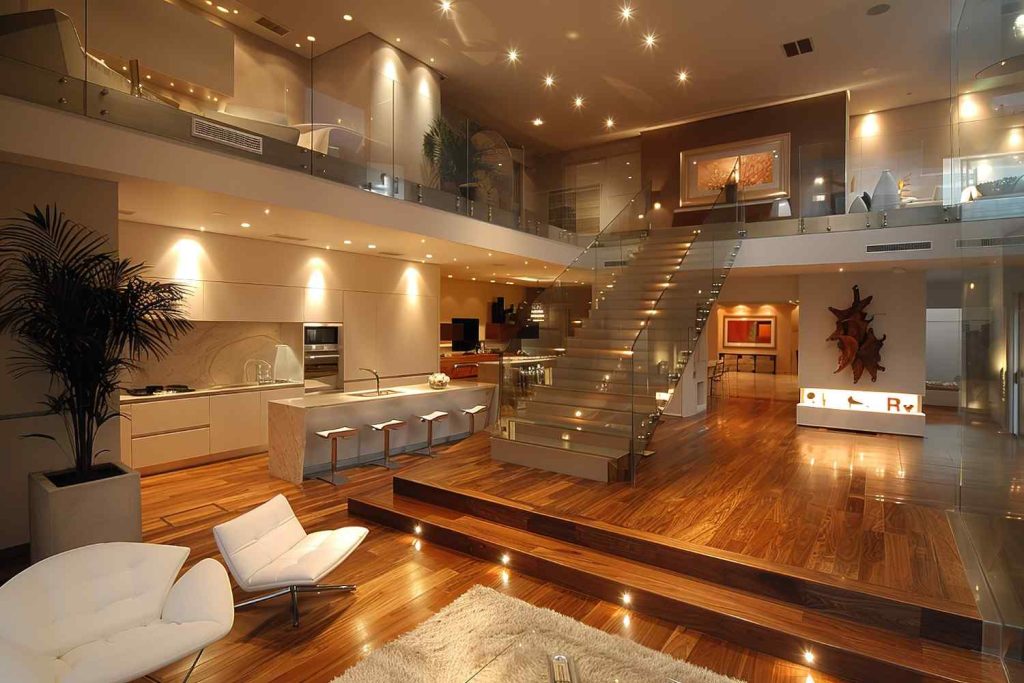
Lighting helps delineate zones effectively. Pendant lights over dining tables, floor lamps near reading chairs, and under-cabinet kitchen lighting define separate areas.
Install dimmer switches to adjust moods independently, dim the dining area during movies while keeping kitchen task lighting bright.
Stop pushing furniture against walls. When you push everything against the perimeter, you create a massive empty void in the center that feels awkward to use. Pull seating 12-18 inches from walls to create intention and breathing room.
Float sofas in the middle of open spaces with backs facing other zones to create instant boundaries. Place a narrow console table behind the sofa for task lighting and a subtle but effective separation between the living and dining areas.
Furniture becomes architecture in open floor plans. Open bookshelves placed perpendicular to walls separate zones while allowing light through. Console tables behind sofas mark boundaries while serving both sides. Kitchen islands with seating create natural transition zones between cooking and living areas.
Back-to-back arrangements use both sides of furniture to serve different areas. A sofa facing a TV from the living room side acts as a divider from the dining area on the back side, maintaining a separate space in the open concept floor plan.
Add that console table behind it to make both sides intentional.
Good, thoughtful space planning considers how people move through environments. Functional paths should be at least 30 inches wide; high-traffic areas need 36-48 inches.
Use painter's tape to mark furniture outlines, then pantomime daily activities: carrying groceries, moving from the sofa to the door. If movements feel awkward, adjust before moving furniture.
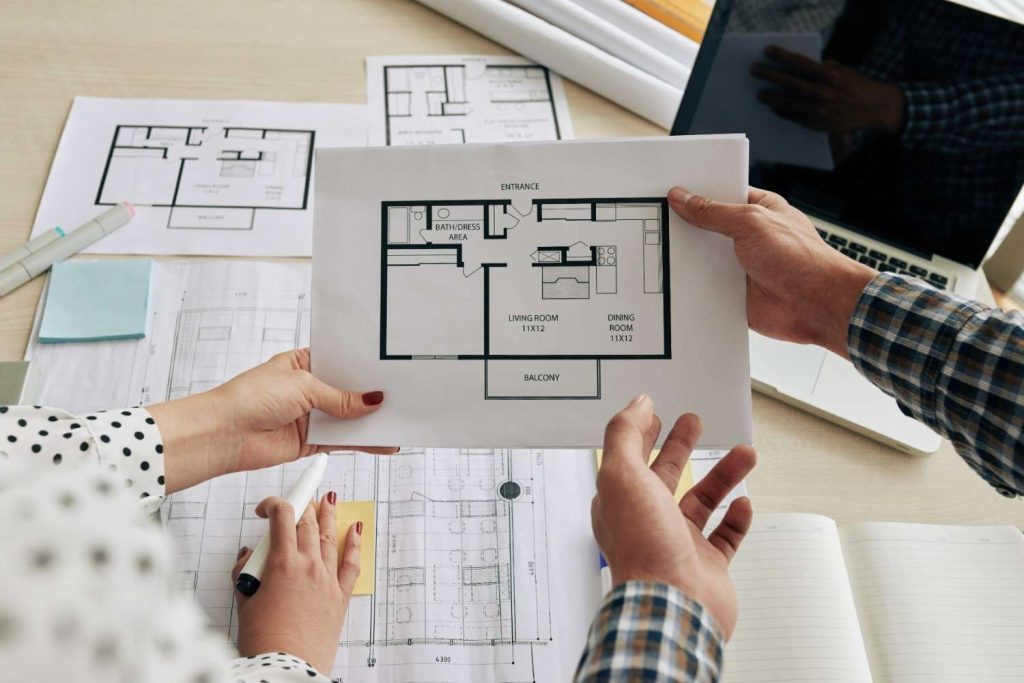
The most expensive mistake happens before buying furniture: failing to map zones. Identify activities your space needs to accommodate: cooking, dining, relaxing, and home office work. Consider fixed elements like kitchens, windows, and doorways that dictate zone placement.
Use graph paper to sketch zones with approximate dimensions. A dining table for six needs about 10x12 feet, including chairs. These measurements prevent buying oversized pieces.
Vertical elements create boundaries without consuming floor space. Half-walls standing 42-48 inches separate kitchens from living rooms while maintaining openness above. Tall plants function as living dividers. Built-in shelving serves as room dividers with storage.
Ceiling treatments reinforce boundaries subtly, enhancing the overall feel of the room and kitchen. Tray ceilings over dining areas create visual separation. Exposed beams mark where one zone ends, and another begins.
Each functional zone needs its own rug. Living areas get rugs anchoring seating arrangements; dining areas get rugs extending beyond tables and chairs. These create visual boundaries signaling which space you're in.
Rugs must relate visually, use the same rug in different sizes,s or choose rugs sharing common elements like color or material. Rug edges should align with furniture, not walls.
The living room sets the design tone. Start with a focal point, fireplace, TV, or large window, and orient seating toward it. Avoid oversized sectionals that overwhelm the space and disrupt the flow of an open concept floor plan.
Common mistakes include using art that is t too small for spaces with high ceilings and long sightlines to add character and balance the room furniture. A single large piece or gallery wall extending 60-80% of the wall width creates appropriate visual weight.
Chandeliers or pendant lights over dining tables are essential, hanging 30-36 inches above the surface. Storage like sideboards or buffets helps manage visibility problems by stashing serving pieces and dining accessories.
Every small appliance needs a home behind closed doors in open concepts. Position kitchen islands so that seating faces the living room while the working side faces away. Upper cabinets with doors rather than open shelving make clutter disappear.
Position home offices away from kitchen noise. Desks facing away from the main activity help create psychological separation. Bookshelves perpendicular to walls behind desks create mini-rooms. Storage with drawers or closed bookcases lets work materials disappear at day's end.
The foundational style should carry through the entire space, then introduce variations. The 80/20 rule helps, 80% of design elements speak the same style language while 20% introduce contrast.
Repeat materials like wood tones appearing in dining tables, coffee tables, and bar stools to tie spaces together.
Use one statement piece per zone: a bold sofa in the living room, an eye-catching chandelier in the dining area. Coordinate statements through color or material, even if forms differ, like navy velvet sofas paired with walnut dining chairs featuring navy cushions.
Tall bookcases draw eyes upward and make spaces feel larger, enhancing the natural light that fills the room. Wall-mounted storage keeps floor space clear. Artwork placed higher than standard height activates empty wall space in rooms with high ceilings. Plants of varying height add life at multiple levels.
Choose a textile color palette that works throughout. If living room pillows feature navy and cream, those colors should appear in dining area chair cushions or table runners. Vary pattern scale while keeping color families consistent.
Closed storage wins in open concepts. Furniture with hidden storage serves double duty; ottomans with interior storage, coffee tables with drawers. Baskets and bins should match or coordinate, reading as intentional systems rather than random accumulation.
When all furniture sits at the same height, spaces look flat. Vary heights intentionally, one or two tall pieces per zone, balanced with mid-height furniture and low elements to create a cohesive look throughout the space. This high-medium-low layering creates interesting visual profiles.
Different flooring in different zones seems logical,l but makes open floor plans feel choppy. Flooring is one of the largest visual surfaces; when you break it with material changes, you create barriers fighting against openness. Consistent flooring creates a unified foundation; use rugs, furniture, and decor for zone definition.
Pushing all furniture against the walls leaves massive center voids, making spaces feel like gymnasiums. Float furniture to create intimate groupings in zone centers. Sofas come away from walls with console tables behind them; chairs cluster around coffee tables.
When every piece sits against the walls, you create a bowling alley effect. Furniture needs to float to create zones and intimacy. Pull sofas 12-18 inches from walls, position chairs at angles, and center dining tables in their areas to enhance the flow of natural light throughout the space.
Soft surfaces help absorb sound, such as area rugs, upholstered furniture, curtains, and fabric wall hangings, which reduce sound bounce and add character to the room. Strategic furniture placement, like tall bookshelves between the living and office zones, creates acoustic barriers.
Open floor plans challenge conventional decorating wisdom, but the challenges are exactly what make them interesting. You're not filling predefined rooms, you're creating spatial relationships from scratch.
The framework I've laid out, understanding zones before buying furniture, using rugs and lighting to define boundaries, floating furniture to create intimacy, maintaining color cohesion while allowing zone-specific variation, gives you a practical path forward.
The best open floor plans in 2026 balance openness with definition. They maintain the light and connection that make these layouts appealing while creating enough structure that each zone feels purposeful. They accommodate real life, the noise, the mess, the need for both togetherness and privacy.
Start with one zone. Apply these principles to your living area or dining space, see how it feels, then extend the approach to adjacent areas. Your open floor plan has potential that closed rooms can't match. Now you have the framework to make that potential real, ensuring each area has its own character while maintaining a cohesive look.
Layer soft textures throughout, plush rugs, upholstered furniture, throw blankets, and curtains. Use warm lighting with multiple sources at different heights. Create intimate seating groupings by pulling furniture away from walls and clustering pieces closer together.
Use your largest piece (usually the sofa) as an anchor by floating it in the space. Create conversation groupings with seating no more than 8 feet apart. Let area rugs define each zone by placing furniture with at least front legs on the rug to create separate spaces within the room and kitchen.
Yes, but work within a coordinated palette. Choose one neutral base that appears throughout, then add zone-specific accent colors that relate to each other. Avoid drastically different color schemes that compete visually.
Use one rug per functional zone, typically one for the living area, one for dining, and smaller rugs for additional zones. The rugs should relate visually through color, material, or style. Three to four rugs work for most open floor plans, helping to define separate spaces while maintaining a cohesive look.
Pushing all furniture against the walls and leaving the center empty. This creates a showroom effect rather than a livable space. The second biggest mistake is using furniture that's all the same height, which makes the space feel flat.