7 Modern White Rock Landscaping Ideas to Brighten Your Garden and Front Yard
9 February, 2026
⚪
Johansson
Home > Blog > This Blog
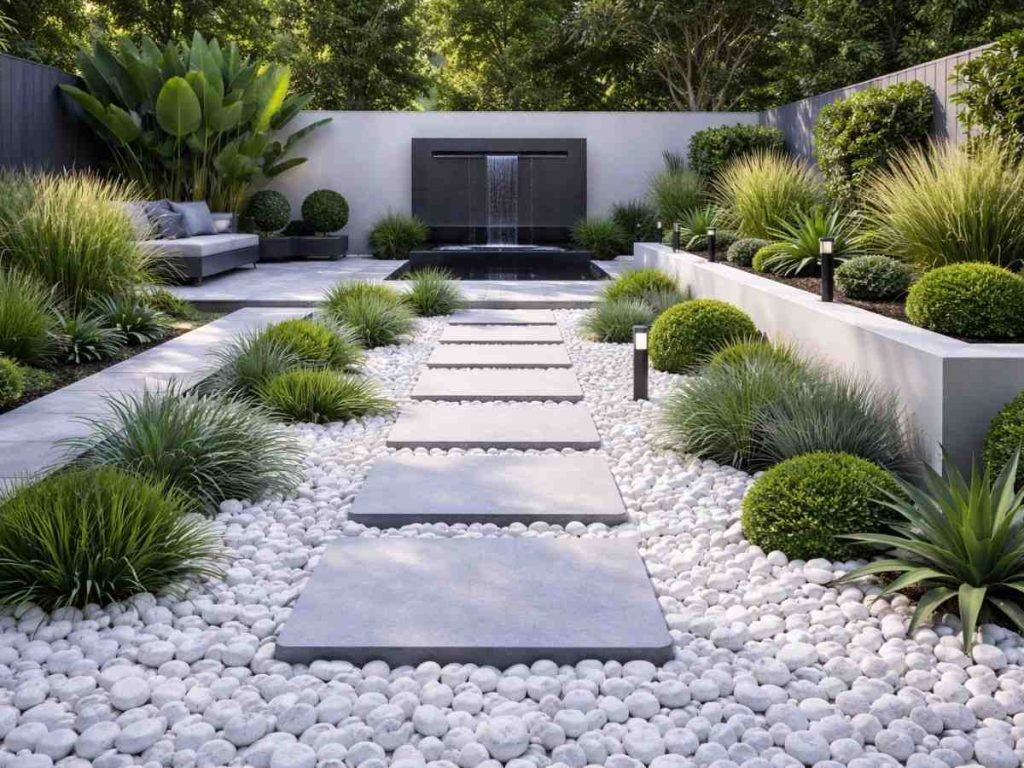
There's a reason white rock keeps showing up in the yards of homes that make you slow down while driving past. It catches light. It makes everything around it look more intentional. And unlike that bag of brown mulch you'll be replacing next spring, white stone actually stays put.
The global decorative rock market hit $72 billion in 2026, driven largely by homeowners figuring out what landscape designers discovered ages ago: white stones for landscaping solve multiple problems at once. They brighten dark corners, reduce watering needs, and give gardens that "finished" quality that's surprisingly hard to achieve with plants alone.
But here's where most people go wrong. They dump a load of white gravel in a corner and call it landscaping. That’s not what actual garden landscaping looks like. Whether you're exploring front yard landscaping ideas or rethinking your backyard, what follows are seven white stone front yard landscaping ideas that actually work, plus guidance on choosing the right stone and keeping it looking fresh.
White reflects all wavelengths of visible light instead of absorbing them. In practical terms, this means white stone for landscaping brightens shaded areas that would otherwise feel drab and forgotten. That north-facing corner where nothing thrives? White river stones can turn it into a deliberate design feature rather than a problem you're trying to ignore.
The contrast factor matters too. Dark greenery pops against white stone in a way it simply can't against brown mulch. Red Japanese Maples, deep purple Loropetalum, and even basic hostas all look more intentional when surrounded by bright white stone for garden beds. Landscaping with rocks in your front yard creates a clean backdrop that makes every plant choice look deliberate.
Wood mulch breaks down; that's the point of it, biologically. But it means you're back at the garden center every spring, hauling bags and spreading material that'll fade to grey by August. White landscape stone doesn't decompose, doesn't blow away in the wind, and doesn't need annual replacement. You might add a thin fresh layer every few years, but compared to organic mulch, stone is genuinely set-and-forget for most homeowners.
There's also the water factor. According to research done by Colorado State University, xeriscaping principles can reduce outdoor water use by 30-50%. Stone mulch helps retain soil moisture by reducing evaporation.
Another research found that well-landscaped homes sell for 5.5% to 12.7% more than comparable properties. While yet another source reported that yard upgrades recover 100% of their cost at sale. All these numbers tell us that giving your garden an upgrade with white stone is a good investment.
These white stone landscaping ideas work for almost everyone. Doesn’t matter if you’re undertaking a weekend project or a commercial landscaping task. With a few tweaks, these ideas serve every need.
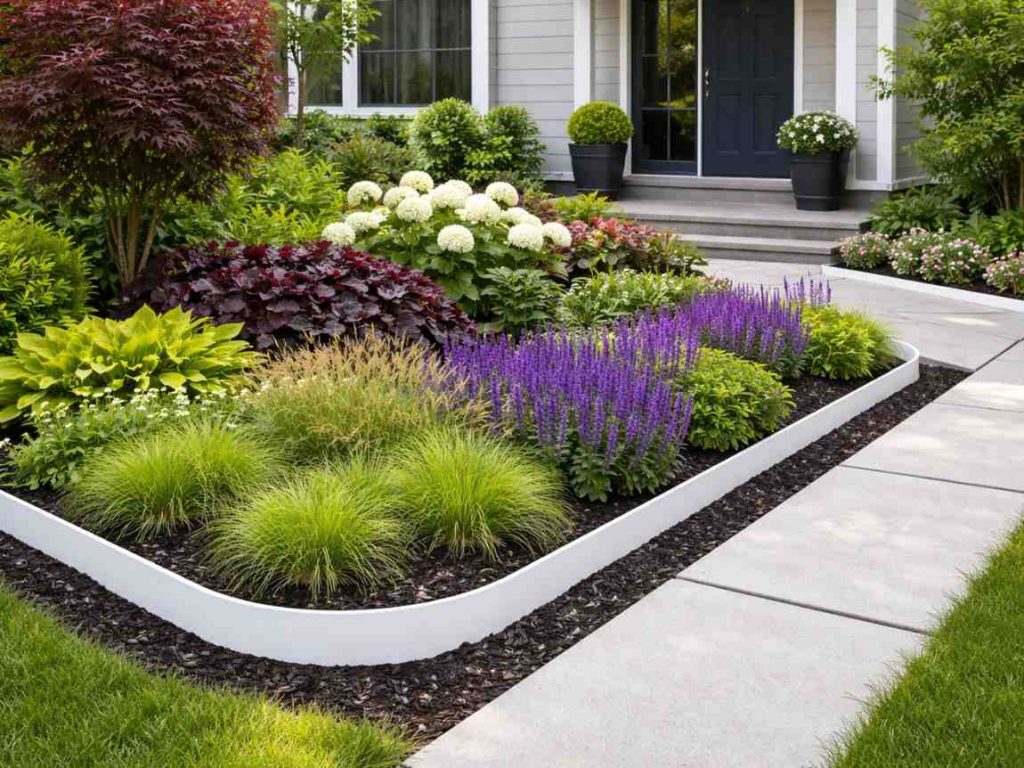
Pair white marble chips with slim black metal edging to line the edges of garden beds with precision. The contrast between dark metal, bright white stone, and green lawn creates sharp, architectural lines. Using white rocks this way works beautifully for white marble rock landscaping ideas around foundation plantings, especially in the front yard, where curb appeal matters most.
Crucial detail: lay quality landscape fabric before the stones go in. Skipping this means future weekends pulling weeds instead of enjoying your yard.
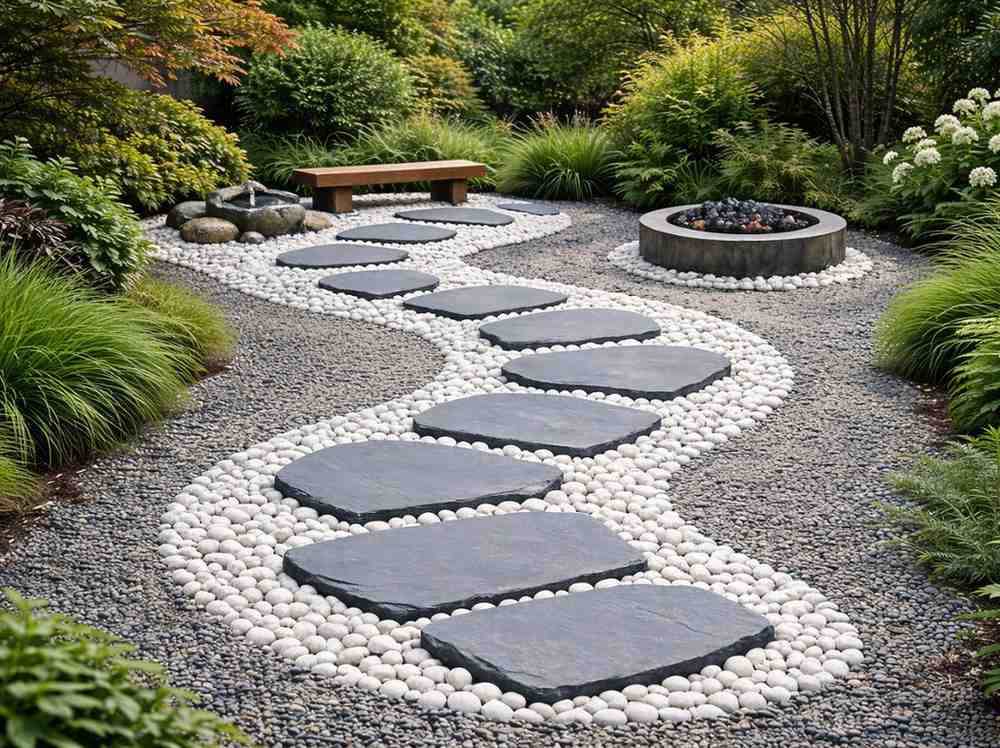
Straight sidewalks are boring. A meandering path using white pebble garden ideas invites exploration and creates a sense of journey even in small spaces.
The modern approach involves "floating" larger grey slate pavers within the white pebble bed. You step from paver to paver while stones fill the gaps. These paths work especially well leading to destinations: a hidden bench, a fire pit, or a water feature.
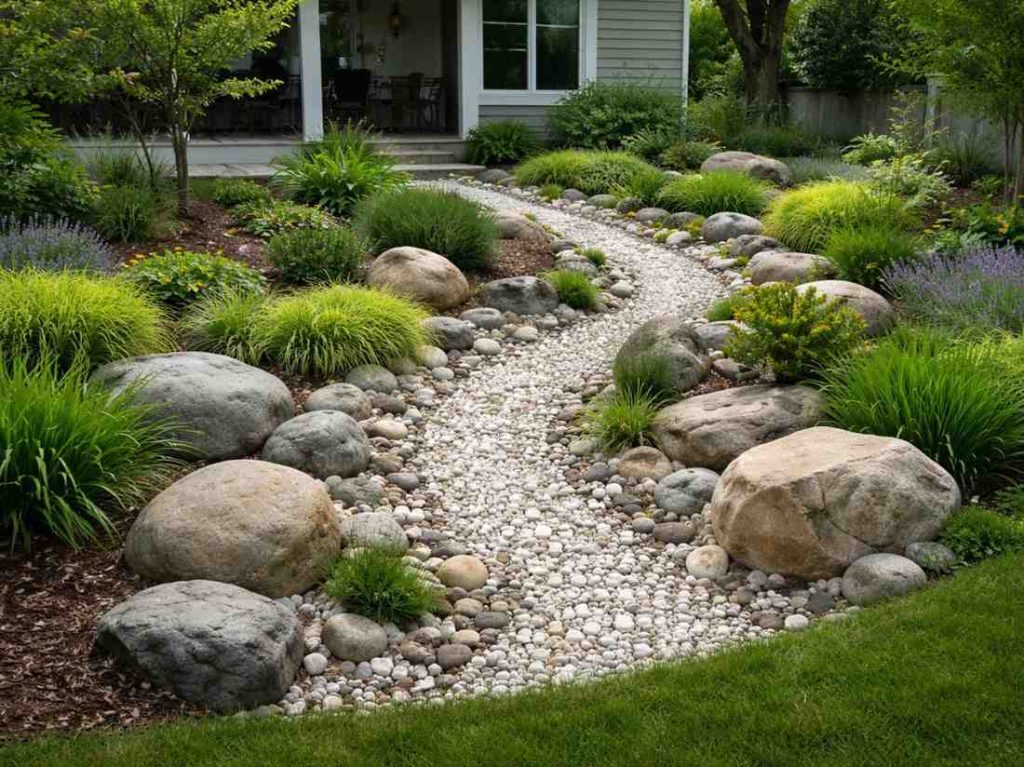
Every yard has drainage issues somewhere. A dry creek bed solves the problem while adding visual appeal. Create a shallow channel mimicking a natural streambed, using white gravel landscaping ideas for the base and larger stones as "boulders."
For complex drainage situations, you can integrate dry creek beds into comprehensive water management. The key is varying stone sizes, as uniform gravel looks flat and artificial.
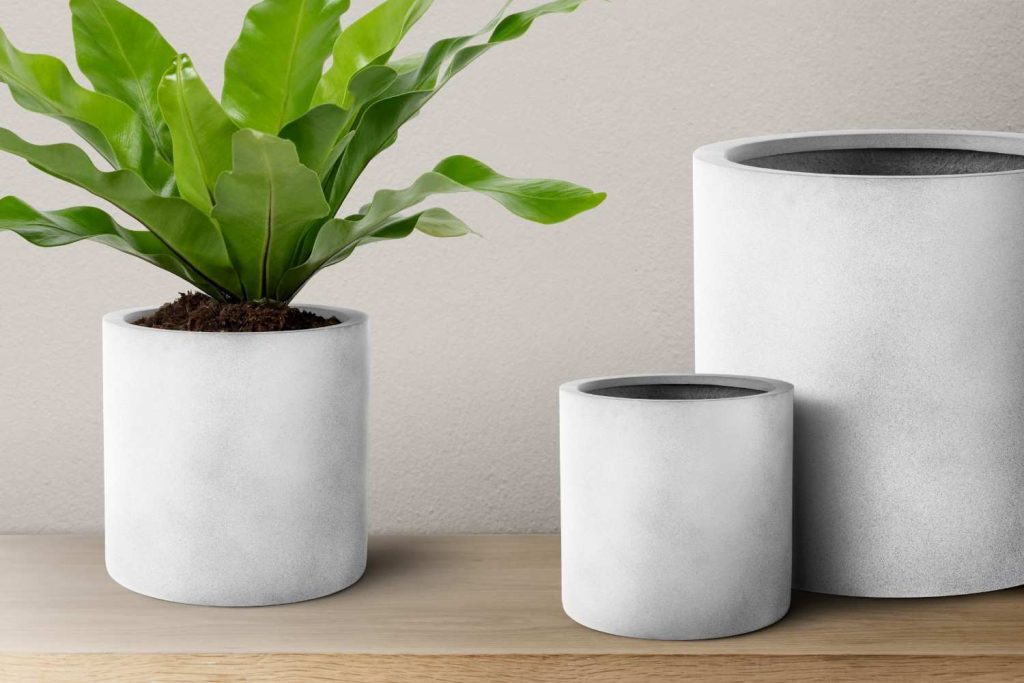
Adding white stones as top dressing for potted plants takes ten minutes per container and transforms basic planters into something that looks designed. This works especially well with dark-colored containers. The contrast is immediate, and it prevents soil splash during watering.
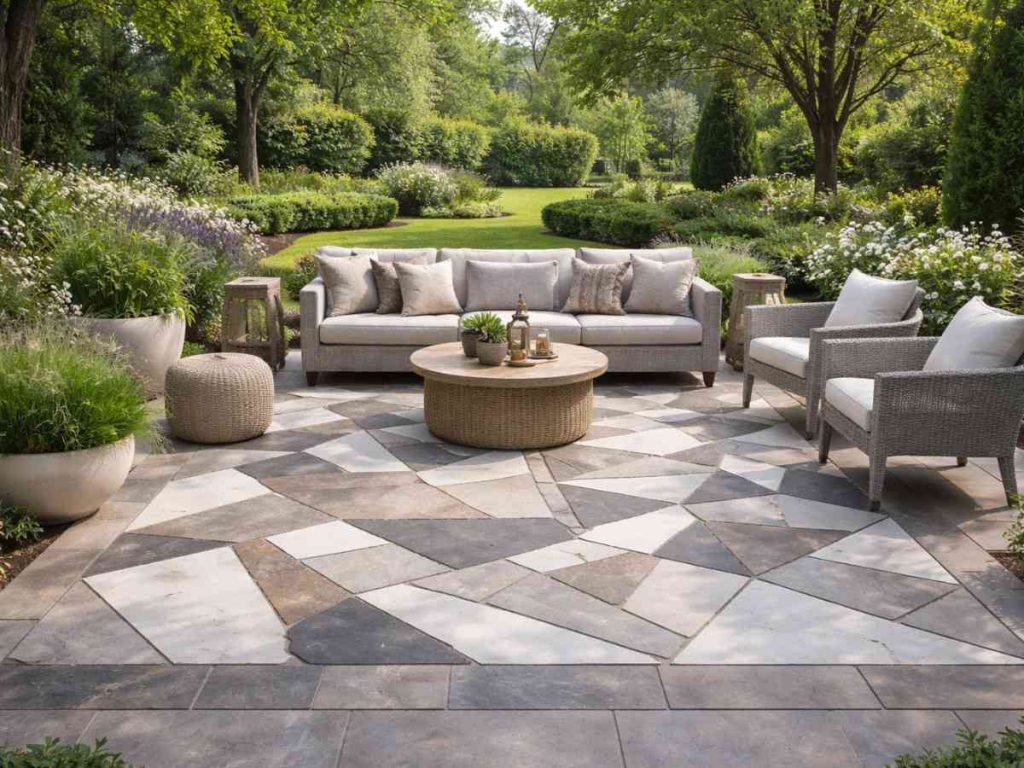
Remove sections of patio pavers or carve out lawn portions and replace them with white stone landscaping. Done deliberately, this creates geometric patterns functioning like outdoor rugs, defining spaces and breaking up monotonous concrete or grass.
Picture alternating squares of concrete and white gravel creating a checkerboard effect beneath outdoor furniture. These installations work best when viewed from above, such as the second-floor windows or elevated decks.

White stones for landscaping create a "stage" for focal points. Because white is visually neutral, it directs attention toward whatever sits on it without competing.
This approach shines with water features. At night, with landscape lighting, reflections on white stone create genuinely impressive effects. The technique also works for specimen trees; a circle of white stone frames them as deliberate focal points.
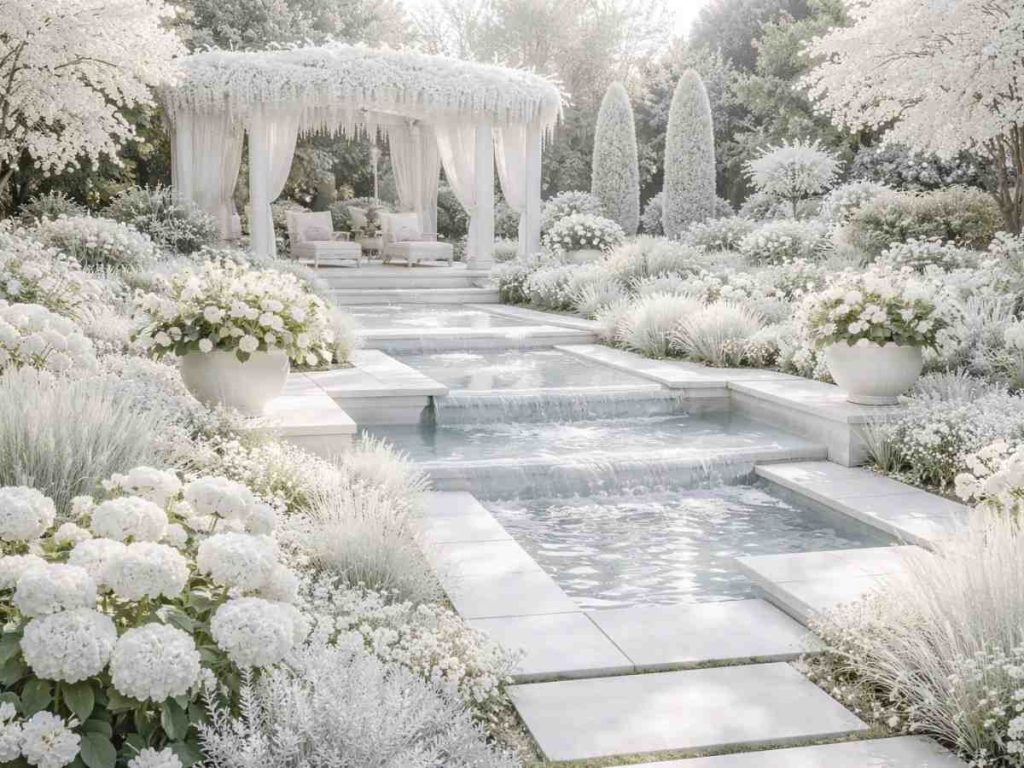
For minimalist-interior lovers, why stop that aesthetic at the back door? A white landscape means making white your dominant texture: white stone groundcover, light furniture, white-blooming plants like hydrangeas.
Small yards feel significantly larger when uniform brightness eliminates visual weight. The trick is varying textures: different stone sizes, smooth and rough surfaces, and varied leaf shapes. Monochrome doesn't mean monotonous.
"Which white stone should I buy?" depends entirely on what personality you want your garden to have. The best garden design ideas start with matching materials to intent.
Budget-friendly, readily available, suitable for large coverage areas like driveways or expansive garden beds. Angular edges lock together and stay put better than rounded alternatives. The aesthetic reads as casual and contemporary; think California coastal vibes rather than formal English garden. For most white gravel landscaping ideas covering significant square footage, this is the practical starting point.
Premium option with subtle sparkle that catches light differently from plain gravel. Marble chips look genuinely expensive because they are. Works best for white marble rock landscaping ideas in high-visibility areas: around pools, near entryways, in containers where people see them up close. Cost runs significantly higher per cubic yard, so using marble for large-scale coverage gets pricey fast. Save it for focal areas.
Smooth, rounded, organic-feeling. The gold standard for white pebble garden ideas and anything leaning toward Zen or naturalistic aesthetics. Rounded shapes feel more comfortable underfoot than angular gravel, making them preferable where people might walk barefoot. They look less artificial than crushed stone. Nature produces smooth river rocks, so the visual registers as authentic.
Large sculptural elements add height, focal points, and structural presence that smaller stones can't achieve. Use sparingly and intentionally. One well-placed boulder makes a statement, while fifteen of them scattered randomly look like a quarry accident.
Quick sizing rule: Smaller stones create a relaxed, almost beachy feeling. Larger, smoother stones feel architectural and curated. Match stone size to your overall design intent.
White stone requires slightly more attention than darker alternatives. Dirt and leaf stains show more readily. But maintenance is manageable.
The best modern white rock landscaping ideas share something in common: they use material intentionally rather than as an afterthought. The difference between "rocks dumped in a yard" and "designed landscape" comes down to thoughtful execution.
Start small if uncertain. Perhaps a single planter with white stone topping, or a narrow border along one garden bed. These low-commitment projects show how white stone works with your specific plants, architecture, and lighting conditions before you scale up to something bigger.
For ambitious installations (or if you'd rather skip the learning curve entirely), working with experienced front yard white stone landscape designers ensures results match vision. At Johansson Design, we've helped homeowners translate ideas like these into design projects and private gardens that deliver on their promise. Your yard is already waiting. The question is just what you're going to do with it.
White shows dirt more visibly, but maintenance is often overstated. Weekly debris removal and occasional rinsing keep rocks looking good. The bigger issue is organic staining from decomposing leaves, which regular blowing prevents.
White River pebbles feel comfortable underfoot due to their smooth surfaces. For high-traffic areas, combine them with stepping stones. Angular gravel packs tighter but feels rougher barefoot.
Stone costs more upfront, often two to three times as much installed. But mulch needs annual replacement while stone lasts for years. Over five years, stone usually proves more economical.
No. White stone benefits many plants by retaining moisture, suppressing weeds, and reflecting light. The only caution: white stone in full sun can increase temperatures around heat-sensitive plants in extremely hot climates.
Many projects like container topping, simple borders, and small pathways are achievable DIY. Larger projects involving grading, drainage, or significant square footage benefit from professional installation.